 Image 1 of 6
 Image 2 of 6
 Image 3 of 6
 Image 4 of 6
 Image 5 of 6
 Image 6 of 6
More Seeds
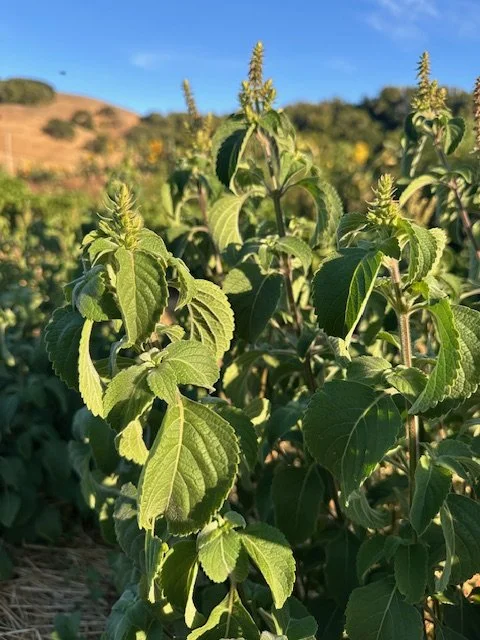
This variety of tulsi has all the same medicinal properties as ‘Krishna’ and ‘Rama’ but is distinctly much bigger of a plant. The large, light green fuzzy leaves have a clove-like aroma and are perfect for making tea. Originally from East Africa and South Asia, this variety can grow up to 6 feet tall and can perennialize in warmer regions. If you’re looking for a tulsi to turn into tea or medicine, this is the right variety for you! If you are looking for tulsi for spiritual purposes, ‘Krishna’ or ‘Rama’ is the proper variety instead.
Tulsi Basil is one of the most culturally important herbs for medicinal and spiritual uses in South Asia. Regular consumption of tulsi not only helps protect and detoxify the body's cells and organs, it can also help reduce toxic stress by relaxing and calming the mind and offering many other psychological benefits.
Numerous studies show that tulsi has anti-diabetic, anti-bacterial, anti-carcinogenic, anti-fertility, anti-ulcer and many other activities. The compounds present in this herb help the body and mind cope with a wide range of chemical, physical, infectious and emotional stresses and restore physiological and psychological function.
At least 200 seeds per Packet.
Ocimum gratissimum

An heirloom pepper variety originally from Hubli, India. These peppers are long (5-6”), thick walled and spicy. They’re the classic Indian chillies, an essential for any and all South Asian cooking.
The plant itself is extremely prolific, sending out dozens of chillies that go from green to orange to red, affecting the spice level with it. The is our most favorite pepper variety on the farm. Perfect for those who like to have a few spicy green peppers to munch on with their meals. We have also made a delicious achaar (Indian pickle) using these green peppers and green mango. When the peppers turn red we like to put them in the oven on the lowest heat to quickly dry them down and either blend them into a chilli powder or into chilli flakes. Highly recommend using the chilli flakes for a chilli crisp! They have the perfect heat and smokiness.
These seeds were gifted to us by one of our customers at the Irvington Farmers Market in Fremont. He brought them back from his hometown of Hubli, in the Southern State of Karnataka, India. We have been stewarding this variety for the past four years.
25 seeds per packet.
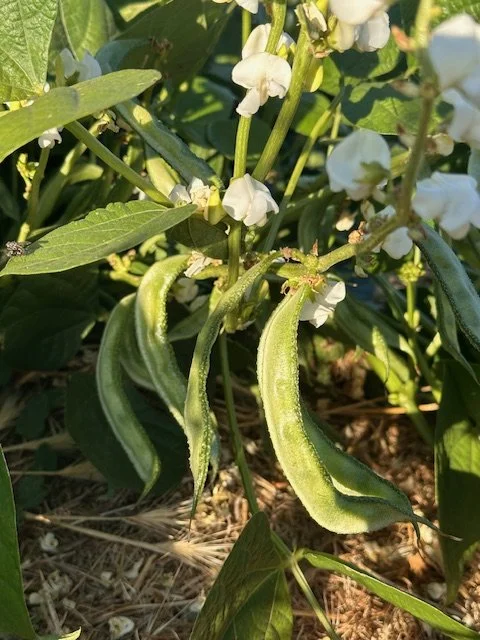
An easy to grow, bush variety of Val Papdi producing 4-5” long beans. The plants are 2-3 feet tall and produce towering shoots of bright white flowers followed by the beans. Harvest when the beans are still young and immature.
Seeds can be direct seeded or started indoors and trasplanted out once soil temperatures have warmed. We recommend planting at least 3 plants 12” apart from eachother to be able to harvest enough beans to cook with at a time. No trellising required!
Known as hyacinth beans in English.
Minimum 20 seeds per packet.
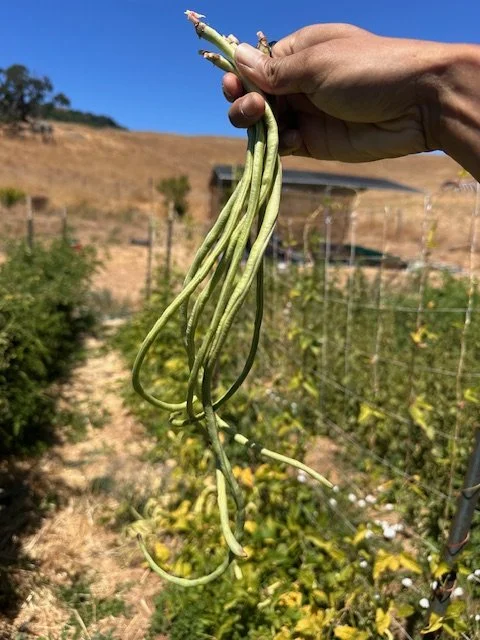
Long beans are one of the easiest plants to grow and produce a daring amount of food in the heat of the Summer! We planted our long bean seeds directly into the soil, spaced 4” apart, and before we knew it the plants had creeped their way to the top of our trellis and were adorned with the most stunning, delicate light purple flowers.
Long beans require a trellis or fence to grow on. They will continue to produce 12-16” long beans all Summer long. We like to harvest the beans when they are still young and immature. Once the seeds inside have started to fill in, they become too stringy to eat.
Save seeds by letting the beans fully mature and dry up on the vine. Open up the dry pods to reveal the dark brown seeds inside.
Minimum 20 seeds per packet.