 Image 1 of 5
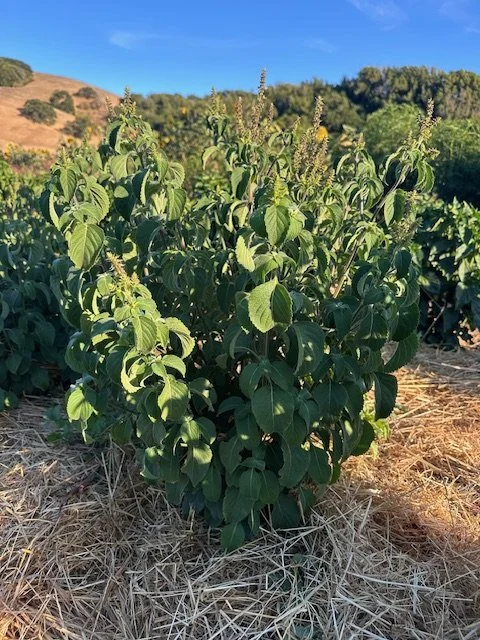 Image 2 of 5
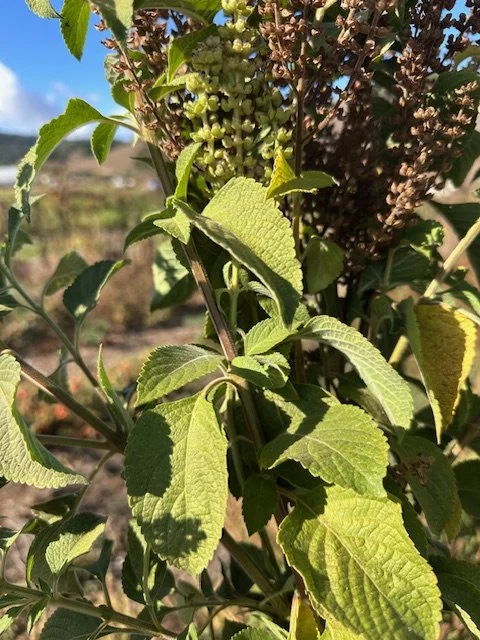 Image 3 of 5
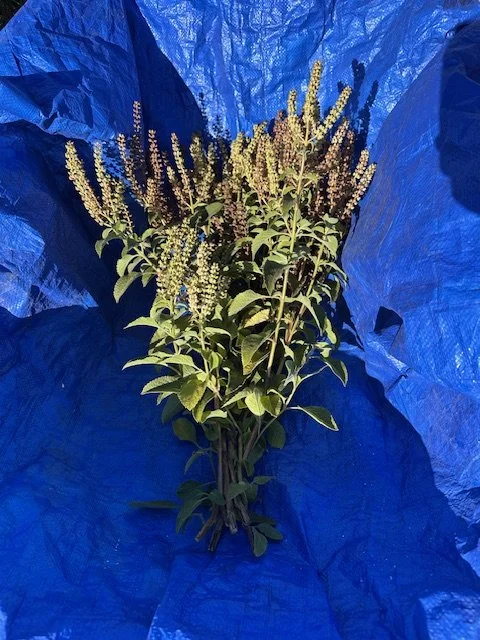 Image 4 of 5
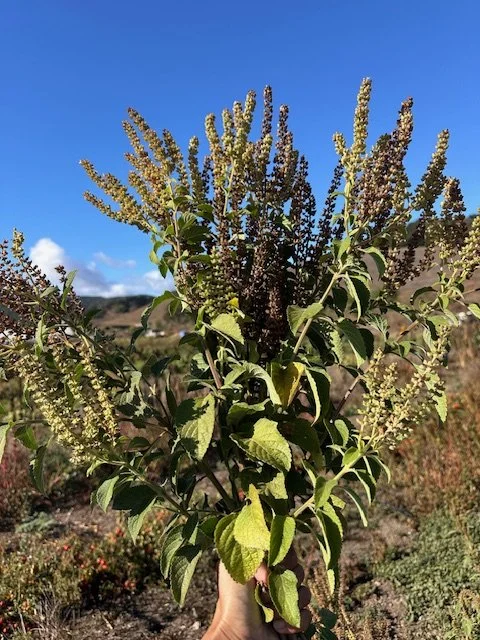 Image 5 of 5
More Seeds

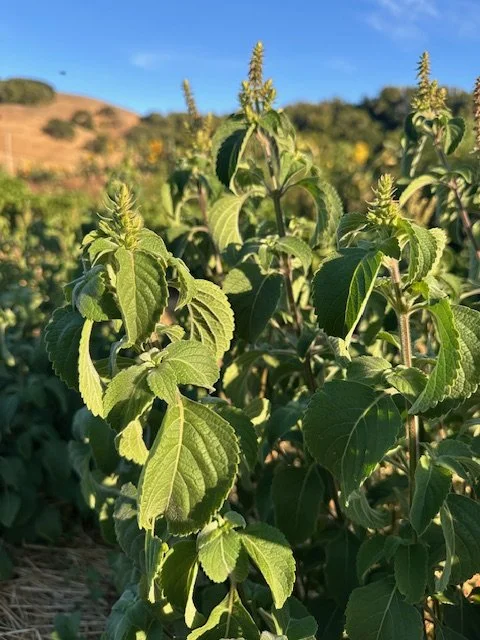
Tulsi Basil is one of the most culturally important herbs for medicinal and spiritual uses in South Asia. This red leaf variety ‘Krishna’ has high levels of rosmarinic acid and eugenol, which lends to its clove-like scent. Regular consumption of tulsi not only helps protect and detoxify the body's cells and organs, it can also help reduce toxic stress by relaxing and calming the mind and offering many other psychological benefits.
Plants grow to a height of 20” at maturity with small, reddish purple leaves. Leaves can be used fresh or dried for tea. This variety is the most medicinal and spiritual of any other variety.
Numerous studies also show that tulsi has anti-diabetic, anti-bacterial, anti-carcinogenic, anti-fertility, anti-ulcer and many other activities. The compounds present in this herb help the body and mind cope with a wide range of chemical, physical, infectious and emotional stresses and restore physiological and psychological function.
Seeds can be tricky to start since they are extremely tiny and require light to germinate. We use seed starting soil in a wide pot (or a takeout container with holes at the bottom), and sprinkle the seeds over the top. Lighly sprinkle a little seed starting soil over the seeds, taking care to not bury to seeds. Be careful while watering, as seeds can easily get buried from the force of the water. Cover the pot with saran wrap and place in a sunny window or greenhouse. Keep soil moist until first signs of germination. Once plants are 1/2” tall, you can seperate them into individual containers to continue growing.
At least 200 seeds per Packet.
Ocimum sanctum (sometimes referred to as Ocimum tenuiflorum)
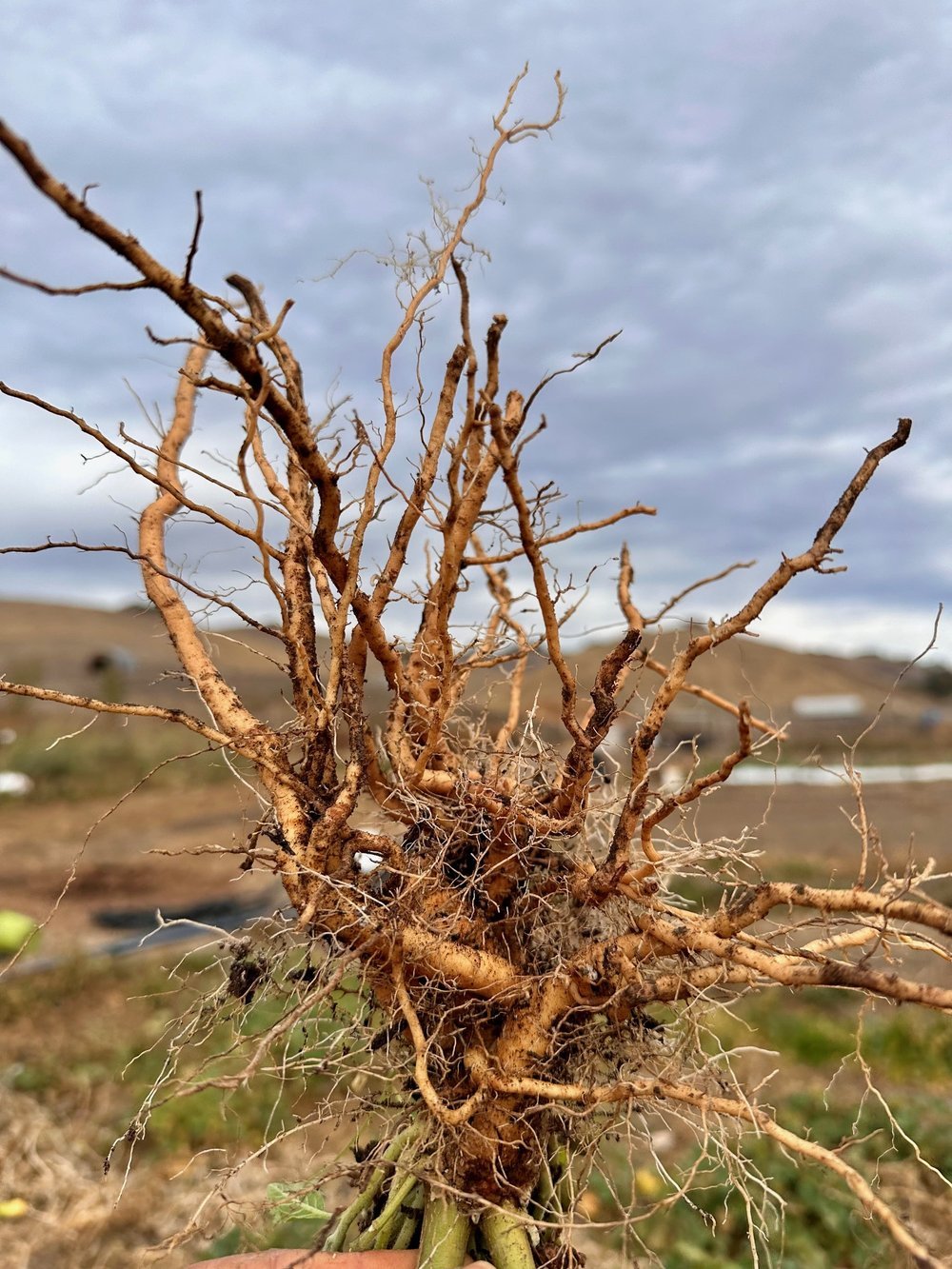
Ashwaganda is a reverred herb in Ayurveda. It grows as a small (2-3 feet tall) shrubby perennial in Zones 10 and higher and can be grown as an annual in Zones 9 and lower. The leaves have similar medicinal properties as the root and can be used fresh or dried in teas. Drought tolerant and easy to grow! Prefers full sun (at least 4 hours).
In Sanskrit Ashwagandha means smell of the horse which refers to both the herb's scent and its potential ability to increase strength. It is a revered herb in Ayurveda for its ability to both calm the nervous system and provide energy and strength. The medicine is most potent in its roots. We recommend growing the plant to full maturity (until November or December), then pulling up the entire plant and harvesting the roots. In the past we have cleaned the roots, dehydrated them and then pulverized them into a powder to add to tea blends.
Although Western sources promote Ashwagandha as great medicine, we must warn that it is a potent medicine that is not recommended for everyone. It has heating qualities, so those with excess pitta should take caution. Personally, we cannot even process the roots until Winter is in full effect as the heating qualities are too aggravating for us in the warmer months.
We have been stewarding these seeds for the past two years.
60 seeds per packet.
Withania somnifera
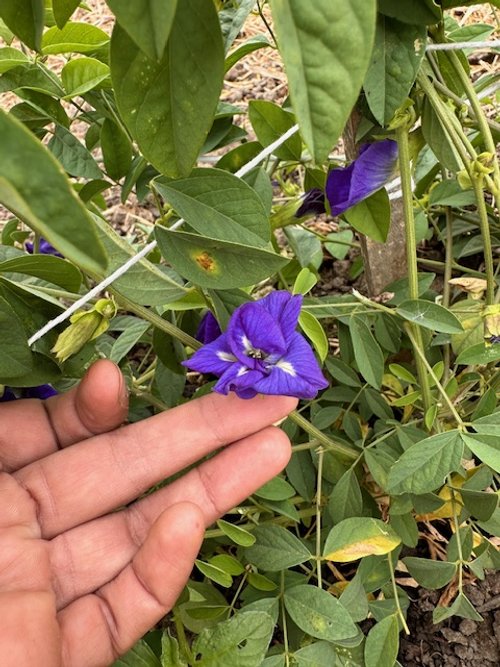
A vining perennial in Zones 10+, this legume grows throughout Asia and has various uses. The flowers are known as "Aparajita" (अपरजिता) in Hindi.
The plant produces deep blue flowers that are typically used as dye. The flowers can also be added to tea, rice or other foods to impart a deep blue color. It has been used for centuries in Ayurveda as a memory enhancer, nootropic, antistress, anxiolytic, antidepressant, anticonvulsant, tranquilizing and sedative agent. The flowers are also used in pujas.
The vine sends out multiple branches that could either be trellised or left to sprawl on the ground. The vine can grow to 4-5 feet tall if trellised. The leaves and flowers both resemble those of other pea plants but the pea pod is only edible when very young and tender. As a legume, the plant fixes nitrogen back into the soil. Prefers full sun.
To make tea:
Use one-quarter of a cup of dried butterfly pea flowers per one to two cups of water. Bring the water to a boil, then remove from heat and add your flowers. Allow them to steep until the water has turned a deep purple or indigo, up to eight minutes. It can be served hot or over ice. Then, add lemon juice and sweetener to taste. As you add the lemon juice, watch the color change from purple to violet!
10 seeds per packet.
Clitoria ternatea

Drought tolerant, annual plant producing the white sesame seed used in South Asian and many other Asian cusines. Plant can grow up to 6 feet - here in Petaluma it grew 4 feet tall and was producing stunning pale pink flowers up until the first frost.
To harvest the seeds, wait for the seed pods to turn brown and dry up on the stalk. Put them into a brown paper bag or fabric bag to collect all the seeds. In Petaluma, the pods were just beginning to turn brown at the end of the season so we put them in a big lawn bag and stored them in a warm, dry place until the plant fully matured and the seed pods ruptured open to release the seeds.
Plant thrives in warm, dry locations. Once plant is established, waterings can be reduced.
200 seeds per packet
Sesamum indicum