 Image 1 of 9
 Image 2 of 9
 Image 3 of 9
 Image 4 of 9
 Image 5 of 9
 Image 6 of 9
 Image 7 of 9
 Image 8 of 9
 Image 9 of 9
More Seeds
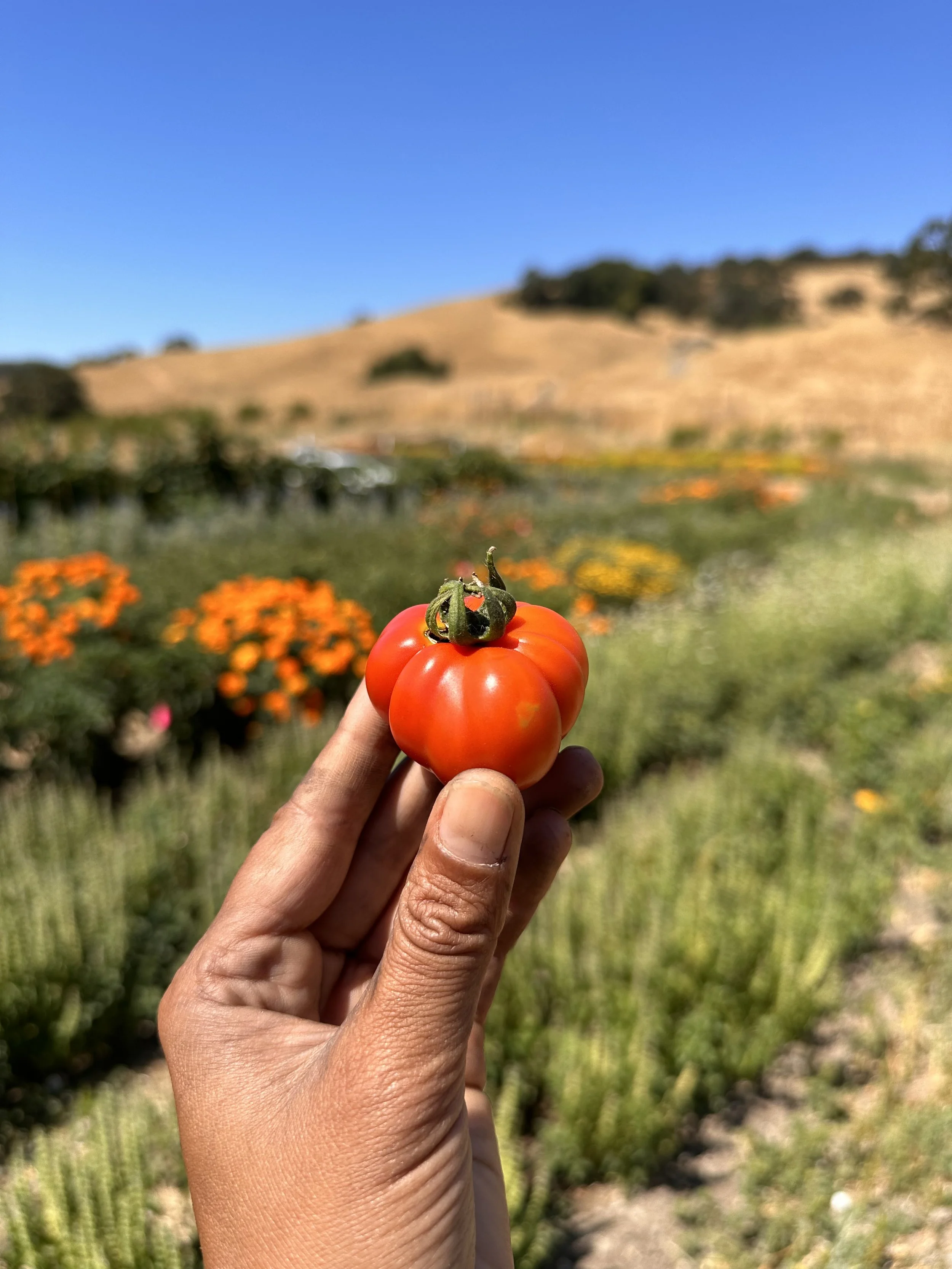
A delicious South Asian tomato variety. Seeds are originally from India and thought to have evolved over time to lend the classic, yet essential, sour component to South Asian dishes. From a community tomato tasting we held, the top tasting notes for these tomatoes were determined to be tangy, juicy, meaty and earthy. In general, they are more acidic than sweet and level up typical South Asian tomato based dishes such as rasam, tomato chutney, channa masala and tomato prawn curry…
Fruits are 2-3” in diameter and plants are extremely prolific. We named these tomatoes “Desi Girl” as they are similar in size to the Monsanto owned hybrid “Early Girl.” However, our seed is open pollinated and distinctly more tart than the early girl tomato.
Each Desi Girl tomato plant can produce up to 10 pounds of fruit through the season. As a determinate variety, it will set dozens of flowers at the same time and produce fruit within a 1 month window. Can benefit from a tomato cage although it is not necessary. Do not prune off the lower branches.
Because of how prolific these plants are, we always end up cooking down a bunch of the leftover tomatoes and freezing or canning them to use during the Winter!
These tomatoes were also featured front and center in SF Chronicles best dishes of 2023 thanks to Tacos Sincero and their Tomato Tostada (Ranked #2)
As an open pollinated variety, anyone can save seeds and regrow this same variety next year! Simply squeze the flesh of the ripe tomato into a small glass, add a bit of water and let ferment for a few days. Decant the seeds by adding more water and slowly pouring off the seeds and flesh that float to the top. Do this a few times until the water runs clear and the remaining seeds have settled to the bottom. Strain seeds, dry them on a plate of piece of wax paper and then store in a paper envelope or glass jar out of direct sunlight. Seeds stay viable for 5-7 years.
Minimum 25 seeds per packet.

An heirloom pepper variety originally from Hubli, India. These peppers are long (5-6”), thick walled and spicy. They’re the classic Indian chillies, an essential for any and all South Asian cooking.
The plant itself is extremely prolific, sending out dozens of chillies that go from green to orange to red, affecting the spice level with it. The is our most favorite pepper variety on the farm. Perfect for those who like to have a few spicy green peppers to munch on with their meals. We have also made a delicious achaar (Indian pickle) using these green peppers and green mango. When the peppers turn red we like to put them in the oven on the lowest heat to quickly dry them down and either blend them into a chilli powder or into chilli flakes. Highly recommend using the chilli flakes for a chilli crisp! They have the perfect heat and smokiness.
These seeds were gifted to us by one of our customers at the Irvington Farmers Market in Fremont. He brought them back from his hometown of Hubli, in the Southern State of Karnataka, India. We have been stewarding this variety for the past four years.
25 seeds per packet.
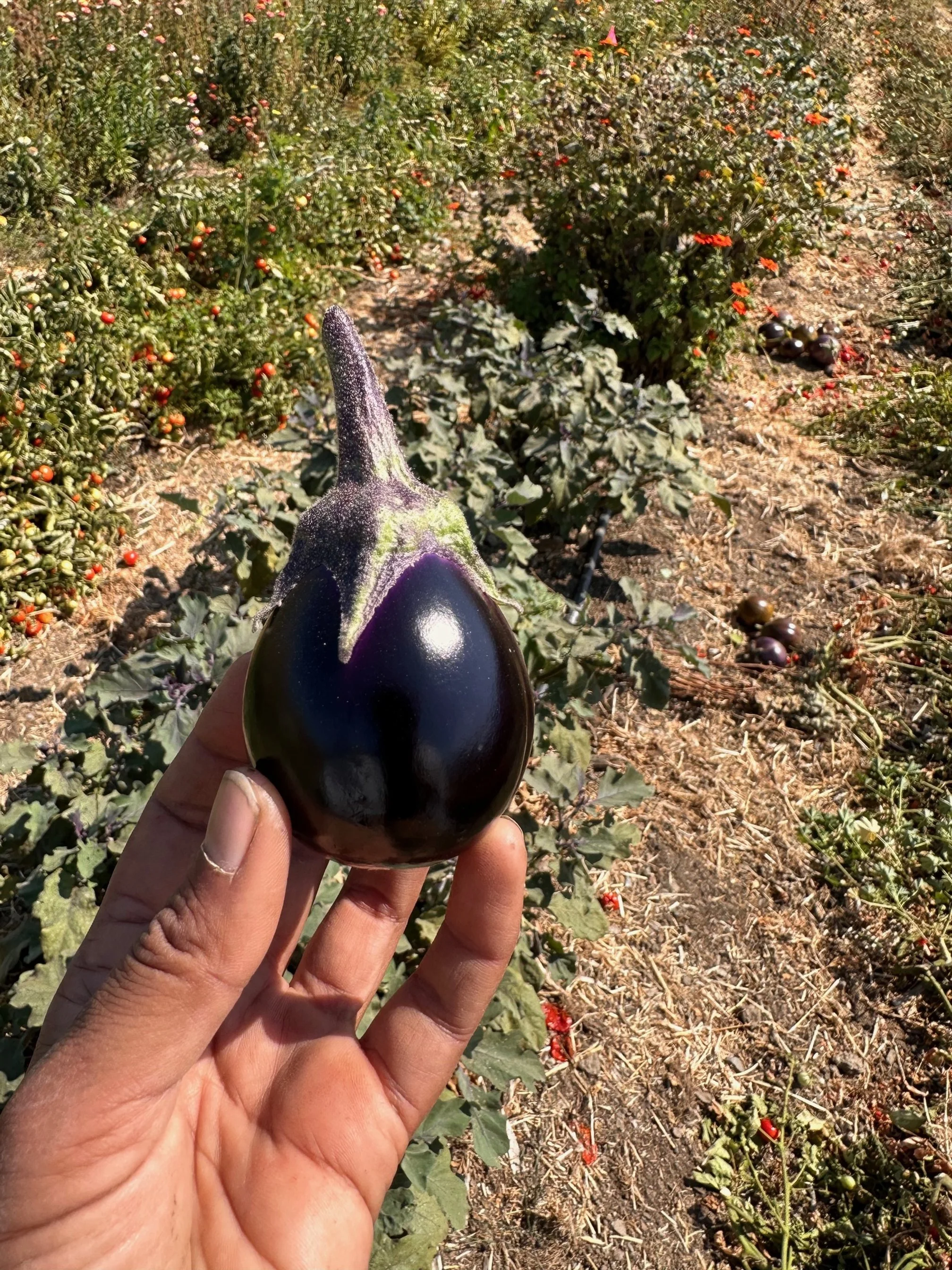
A popular variety of eggplant in South and Southeast Asia. Small oval eggplant with glossy reddish-purple skin. This variety grows to 2-3” and is a bit easier to grow than other eggplants. Perfect for making masala stuffed eggplant. I was shocking just how many eggplants we were able to harvest off of each plant. If you are consistently harvesting them when they are still small, the plant will continue to put energy back into flower/fruit production. You can also let the eggplants grow a bit bigger and they are still delicious. We made a lot of batches of baba ganoush with the eggplants that got a little too big.
This variety is one of the first crops on our farm to start producing fruits and produces all the way until frost. Grows as a small bush and does not require staking or trellising. Can tolerate colder climates.
25 seeds per packet.

Tulsi Basil is one of the most culturally important herbs for medicinal and spiritual uses in South Asia. This red leaf variety ‘Krishna’ has high levels of rosmarinic acid and eugenol, which lends to its clove-like scent. Regular consumption of tulsi not only helps protect and detoxify the body's cells and organs, it can also help reduce toxic stress by relaxing and calming the mind and offering many other psychological benefits.
Plants grow to a height of 20” at maturity with small, reddish purple leaves. Leaves can be used fresh or dried for tea. This variety is the most medicinal and spiritual of any other variety.
Numerous studies also show that tulsi has anti-diabetic, anti-bacterial, anti-carcinogenic, anti-fertility, anti-ulcer and many other activities. The compounds present in this herb help the body and mind cope with a wide range of chemical, physical, infectious and emotional stresses and restore physiological and psychological function.
Seeds can be tricky to start since they are extremely tiny and require light to germinate. We use seed starting soil in a wide pot (or a takeout container with holes at the bottom), and sprinkle the seeds over the top. Lighly sprinkle a little seed starting soil over the seeds, taking care to not bury to seeds. Be careful while watering, as seeds can easily get buried from the force of the water. Cover the pot with saran wrap and place in a sunny window or greenhouse. Keep soil moist until first signs of germination. Once plants are 1/2” tall, you can seperate them into individual containers to continue growing.
At least 200 seeds per Packet.
Ocimum sanctum (sometimes referred to as Ocimum tenuiflorum)