 Image 1 of 4
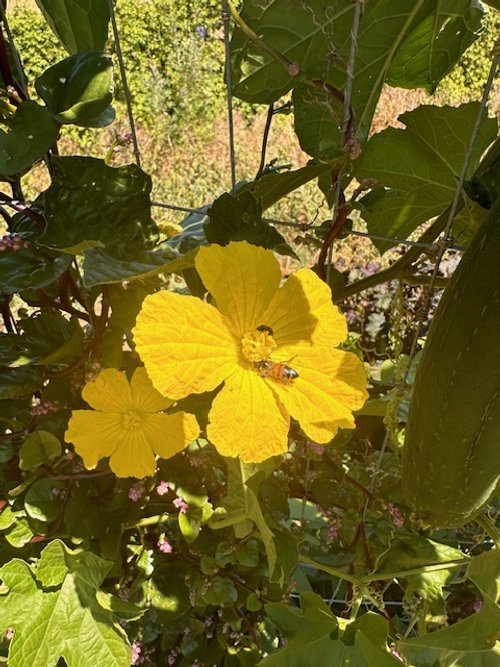 Image 2 of 4
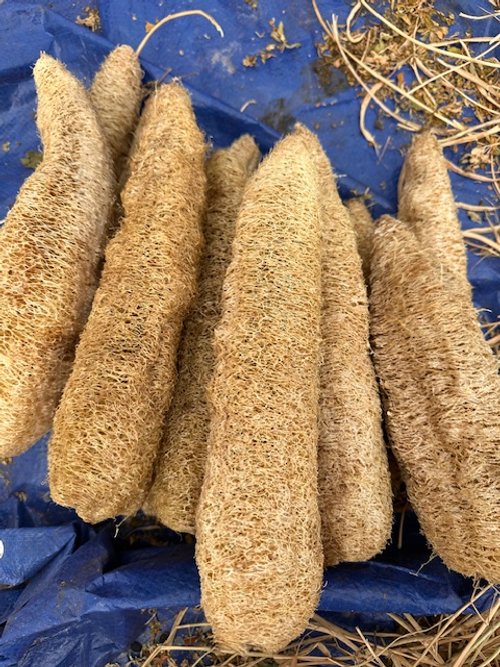 Image 3 of 4
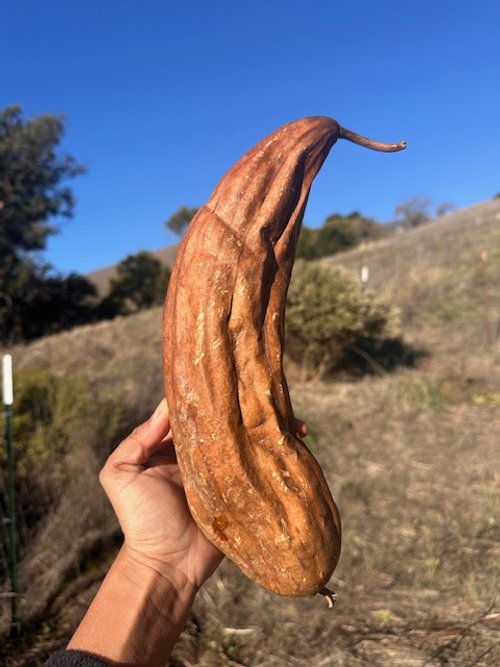 Image 4 of 4
More Seeds
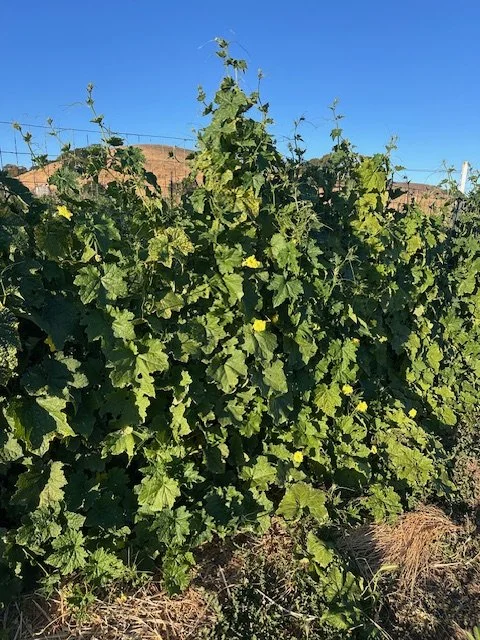
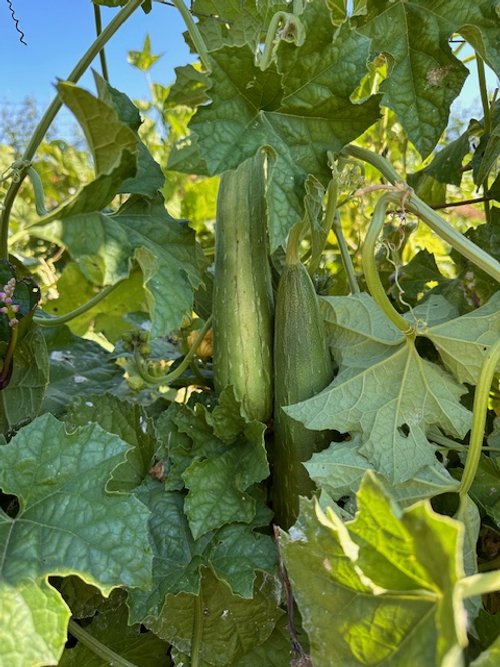
Our ridge gourd plants are the real show stoppers on our farm. We trellis them on 5’ T-posts and by mid-Summer they have already covered the entire trellis and the vines are adorned with small yellow flowers and tiny fruit. The young fruits are edible when 6-8” long. Continual harvesting of the young fruit sends the energy back to more fruit production. If the fruits are left on the vine, they will eventually dry up and become the luffa spong we all know and love.
The fruits resemble zucchini in flavor. The texture is light and airy, and absorbs spices and sauces well. These plants are highly attractive to the native bumble bee!
Plants can send out multiple shoots up to 10 feet long, so make sure to prodive a trellis, fence or space on the ground to grow. Plants like full sun and ample water. In warm regions, the luffahs will begin to dry on the vine 3 months after planting. In our region, we have warm days and cold nights, even in the Summer, so our luffahs were beginning to dry on the vine right as our frost hit (end of October). So we harvested all the luffas and stored them on a metal rack in our greenhouse and they dried up perfectly!
Luffa acutangula
Minimum 10 seeds per packet.
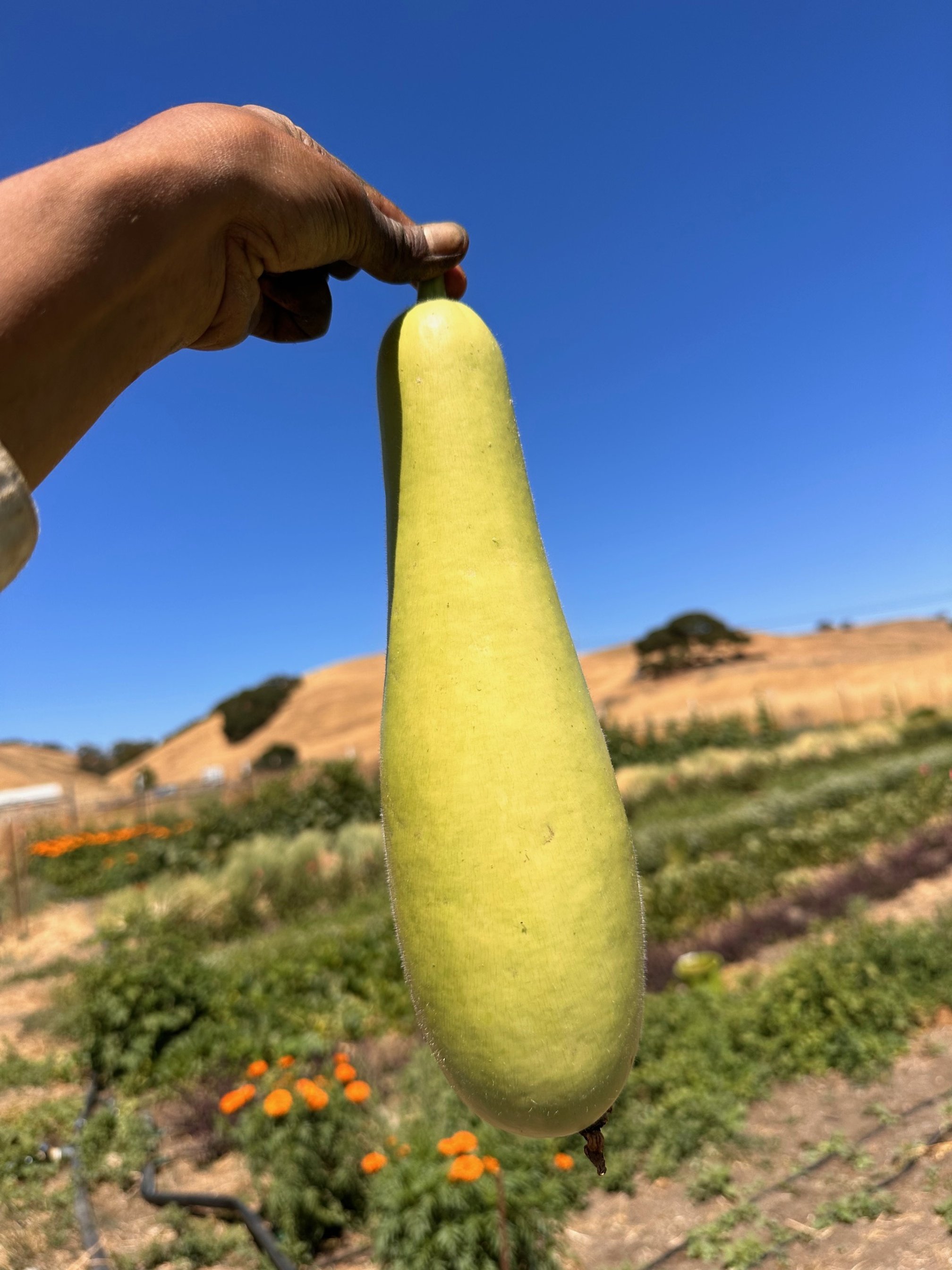
Bottle gourd, also known as Doodhi, Lauki, and Opo, is a versatile vegetable used similarly to zucchini, with a slightly sweeter flavor and firmer texture. This variety produces light green fruit, 1 to 1.5 feet long, and uniformly oval. Bottle gourd is a vigorous trailing or climbing plant with white flowers that open at night. Beneficial insects, especially bumblebees, are extremely attracted to the flowers. Just one thriving plant can grow over 12 ft, so it is essential to plant with a solid support and space to grow!
In our nursery, many of our customers have told us that this variety produces so many fruits they were having to give them away to friends and family in the height of the season!
As fruit thickens, the flavor becomes more diluted. It is best to harvest when the fruit is still young. If left on the vine, the outer skin will harden and fruit can be made into birdhouses, cooking utensils, or as is often done in South Asia, musical instruments.
These seeds were originally gifted to us by our friend Hetal whose family has been stewarding this variety for the past 6 generations in the Nesadi Village of Gujarat, India. These seeds have personnal importance as they are also from the same region as my own matriarchal ancestry. We have been stewarding this variety for the past 3 years.
Packet includes 10 seeds.
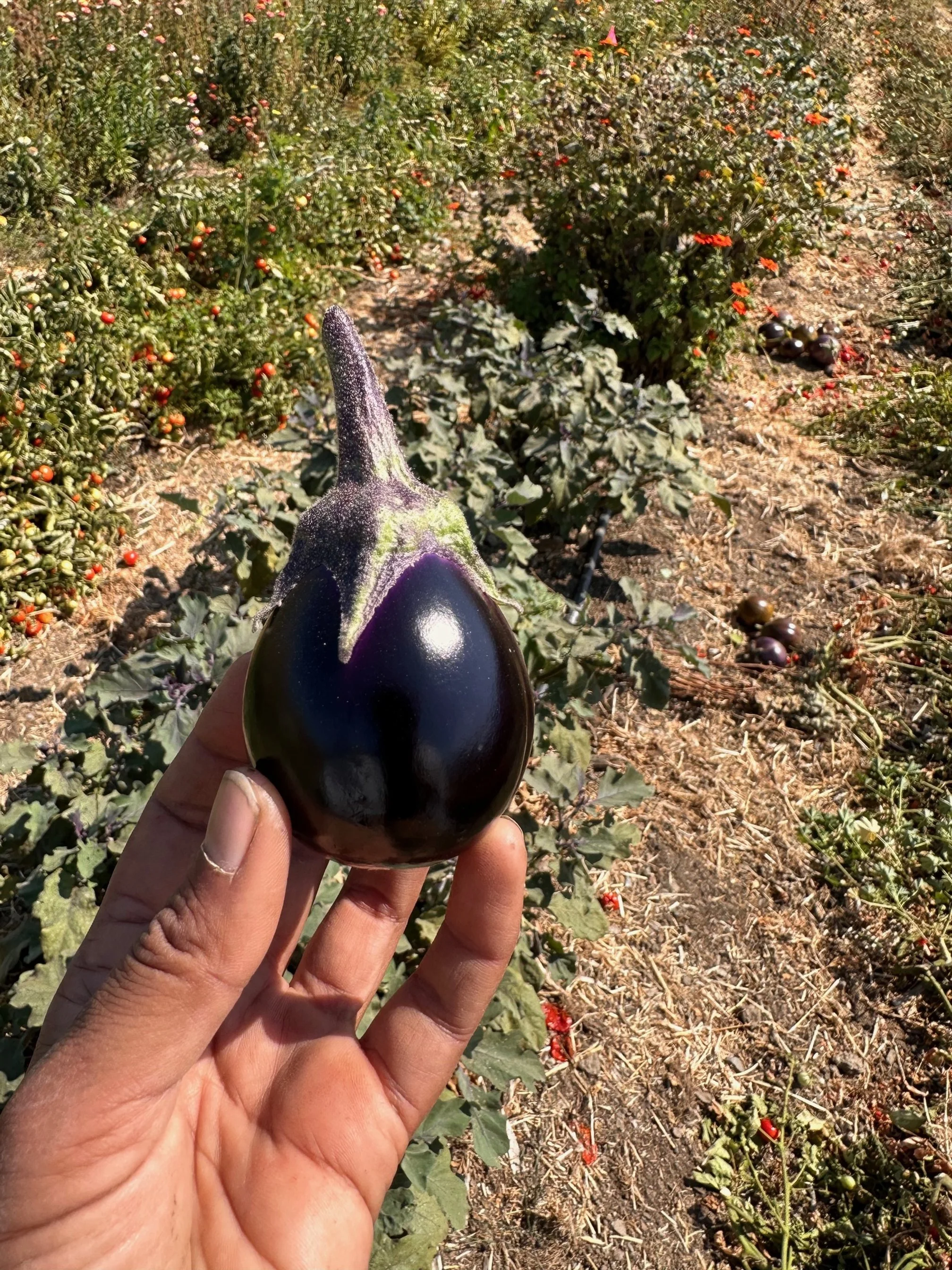
A popular variety of eggplant in South and Southeast Asia. Small oval eggplant with glossy reddish-purple skin. This variety grows to 2-3” and is a bit easier to grow than other eggplants. Perfect for making masala stuffed eggplant. I was shocking just how many eggplants we were able to harvest off of each plant. If you are consistently harvesting them when they are still small, the plant will continue to put energy back into flower/fruit production. You can also let the eggplants grow a bit bigger and they are still delicious. We made a lot of batches of baba ganoush with the eggplants that got a little too big.
This variety is one of the first crops on our farm to start producing fruits and produces all the way until frost. Grows as a small bush and does not require staking or trellising. Can tolerate colder climates.
25 seeds per packet.
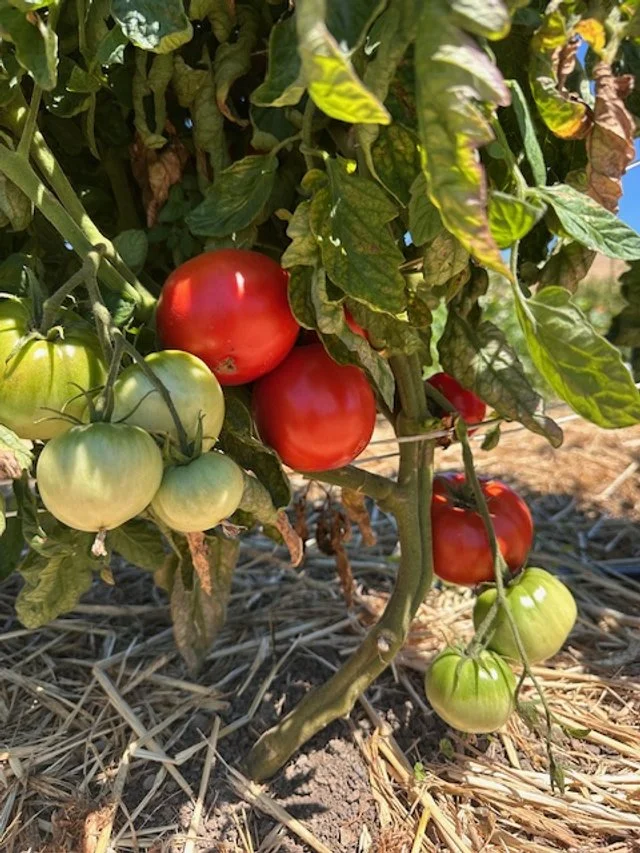
The Nepal tomato is an heirloom tomato originally form the Northern Himalayan mountains. Big sprawling, indeterminate plant producing an abundant crop of 10-12oz (~1/2 lb), smooth, round, scarlet-red tomatoes. Intense sweet, rich flavors. Fantastic early-midseason slicer with sturdy, vigorous vines, crack-resistant fruit, and a heavy set for its size. Can also be harvested green and ripened off the vine. May not be as interesting to look at but the flavor of these tomatoes have made them popular among many tomato growers.
As an open pollinated variety, anyone can save seeds and regrow this same variety next year! Simply squeze the flesh of the ripe tomato into a small glass, add a bit of water and let ferment for a few days. Decant the seeds by adding more water and slowly pouring off the seeds and flesh that float to the top. Do this a few times until the water runs clear and the remaining seeds have settled to the bottom. Strain seeds, dry them on a plate of piece of wax paper and then store in a paper envelope or glass jar out of direct sunlight. Seeds stay viable for 5-7 years.
Minimum 100 seeds per packet.