 Image 1 of 6
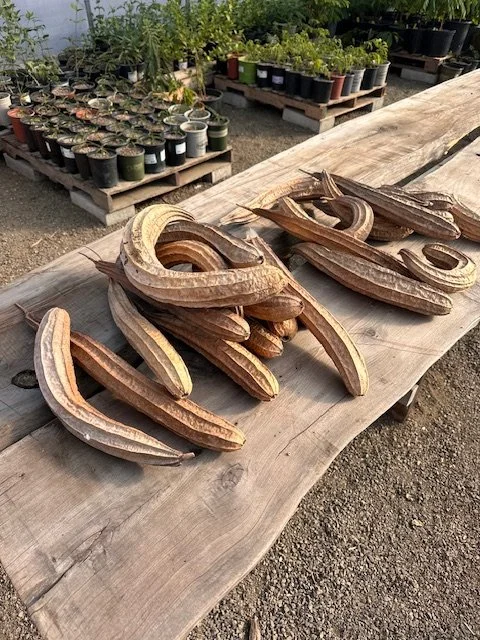 Image 2 of 6
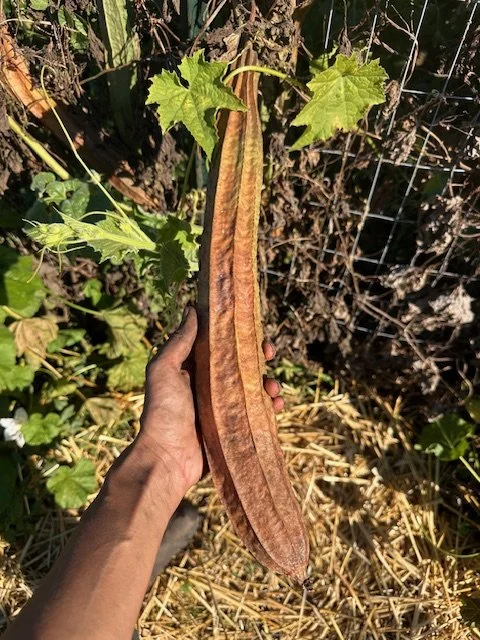 Image 3 of 6
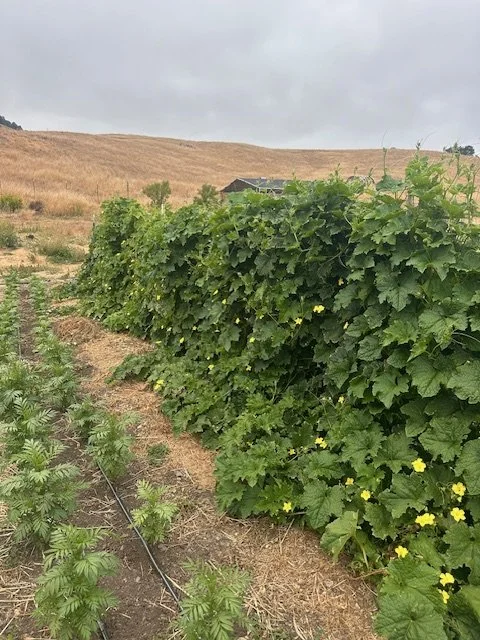 Image 4 of 6
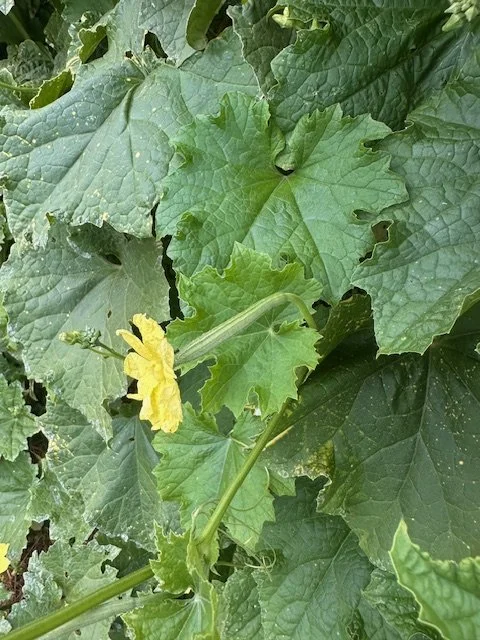 Image 5 of 6
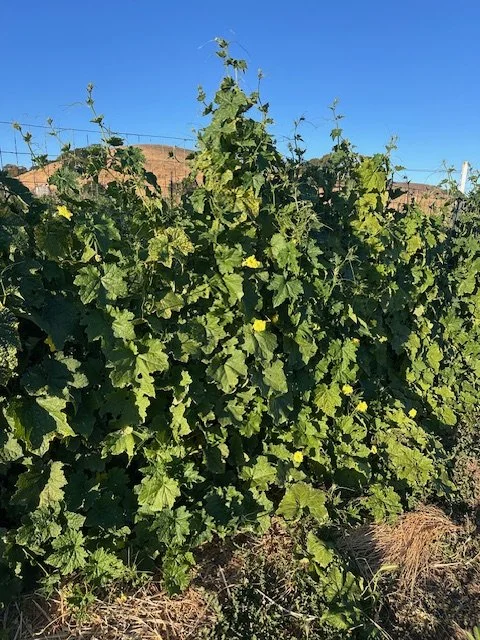 Image 6 of 6
More Seeds
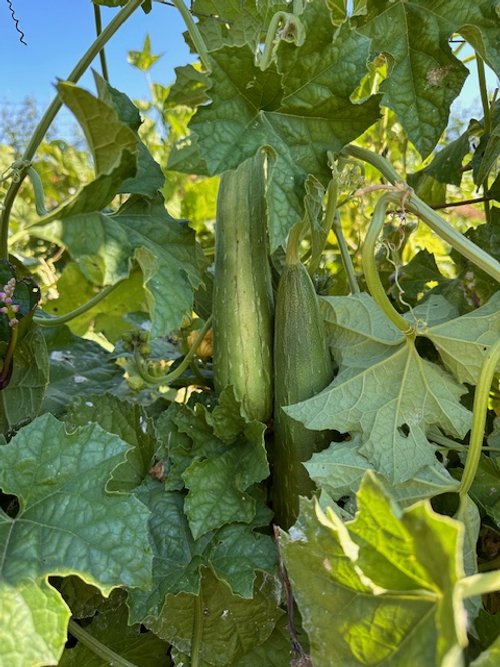
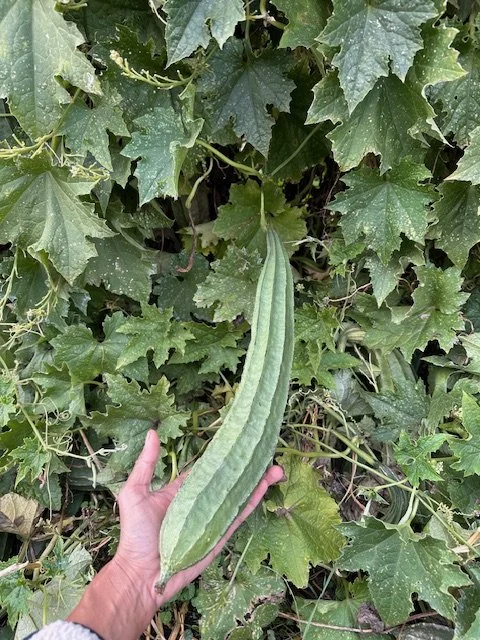
Our favorite plant to grow each year! This is a highly productive variety of the smooth luffa gourd, or Gilki. The fruits are edible when young, resembling a zucchini in flavor. The texture is light and airy, and absorbs spices and sauces well. However, we love to grow this plant for the dried sponges it produces if left on the vine to dry!
Plants can send out multiple shoots up to 10 feet long, so make sure to prodive a trellis, fence or space on the ground to grow. Plants like full sun and ample water. In warm regions, the luffahs will begin to dry on the vine 3 months after planting. In our region, we have warm days and cold nights, even in the Summer, so our luffahs were beginning to dry on the vine right as our frost hit (end of October). So we harvested all the luffas and stored them on a metal rack in our greenhouse and they dried up perfectly!
Our seeds are originally from the Samadhyala Village near Surat, India. They have been cultivated there for over 6 generations before being gifted to us to steward in Petaluma, CA.
Luffa aegyptiaca
10 seeds per packet.
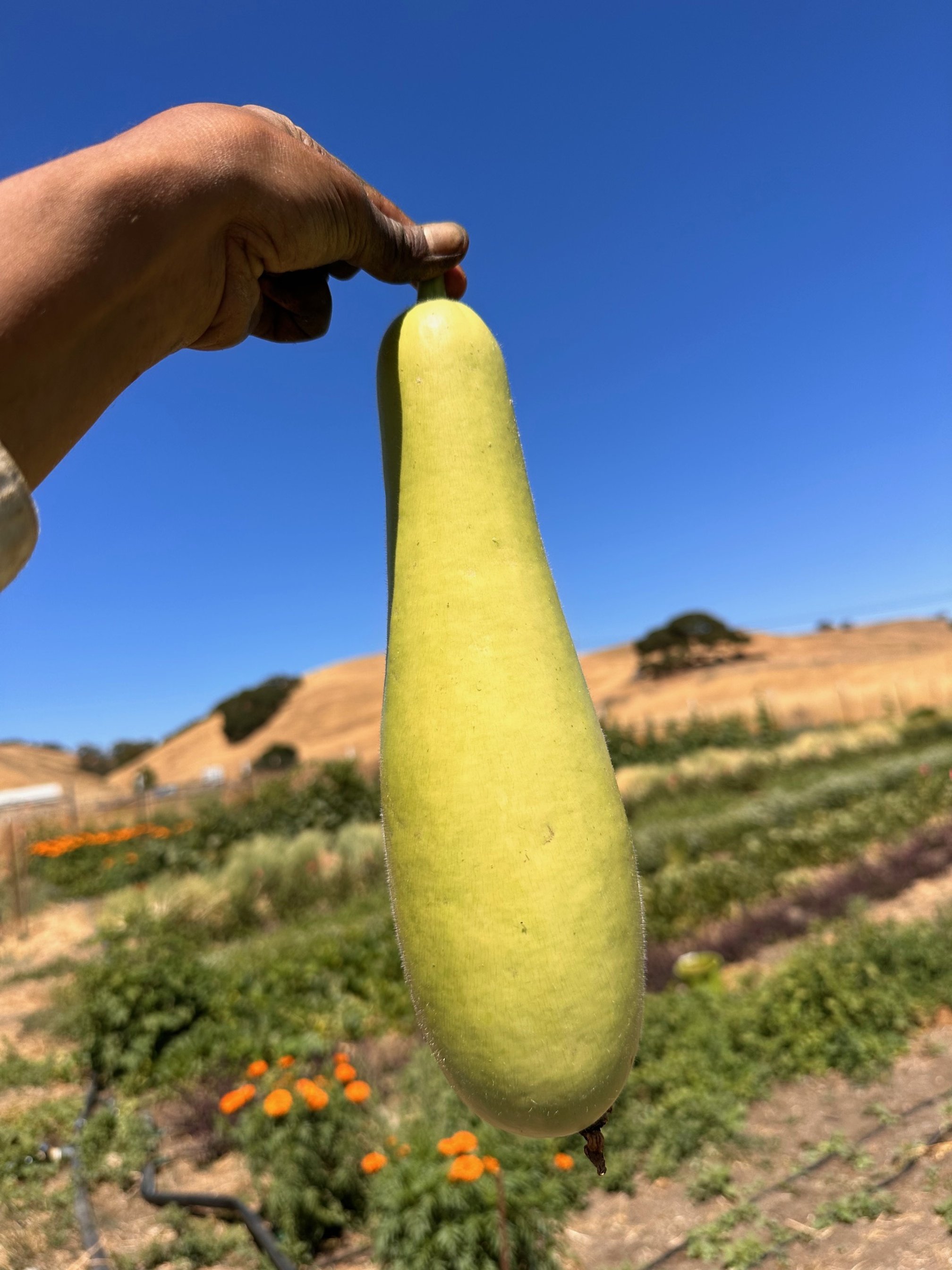
Bottle gourd, also known as Doodhi, Lauki, and Opo, is a versatile vegetable used similarly to zucchini, with a slightly sweeter flavor and firmer texture. This variety produces light green fruit, 1 to 1.5 feet long, and uniformly oval. Bottle gourd is a vigorous trailing or climbing plant with white flowers that open at night. Beneficial insects, especially bumblebees, are extremely attracted to the flowers. Just one thriving plant can grow over 12 ft, so it is essential to plant with a solid support and space to grow!
In our nursery, many of our customers have told us that this variety produces so many fruits they were having to give them away to friends and family in the height of the season!
As fruit thickens, the flavor becomes more diluted. It is best to harvest when the fruit is still young. If left on the vine, the outer skin will harden and fruit can be made into birdhouses, cooking utensils, or as is often done in South Asia, musical instruments.
These seeds were originally gifted to us by our friend Hetal whose family has been stewarding this variety for the past 6 generations in the Nesadi Village of Gujarat, India. These seeds have personnal importance as they are also from the same region as my own matriarchal ancestry. We have been stewarding this variety for the past 3 years.
Packet includes 10 seeds.
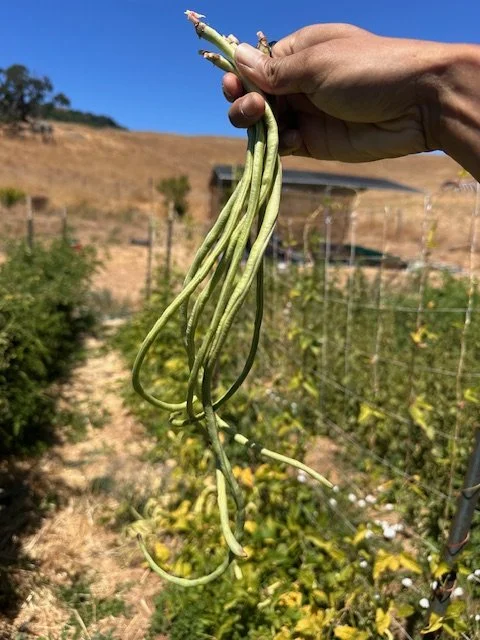
Long beans are one of the easiest plants to grow and produce a daring amount of food in the heat of the Summer! We planted our long bean seeds directly into the soil, spaced 4” apart, and before we knew it the plants had creeped their way to the top of our trellis and were adorned with the most stunning, delicate light purple flowers.
Long beans require a trellis or fence to grow on. They will continue to produce 12-16” long beans all Summer long. We like to harvest the beans when they are still young and immature. Once the seeds inside have started to fill in, they become too stringy to eat.
Save seeds by letting the beans fully mature and dry up on the vine. Open up the dry pods to reveal the dark brown seeds inside.
Minimum 20 seeds per packet.
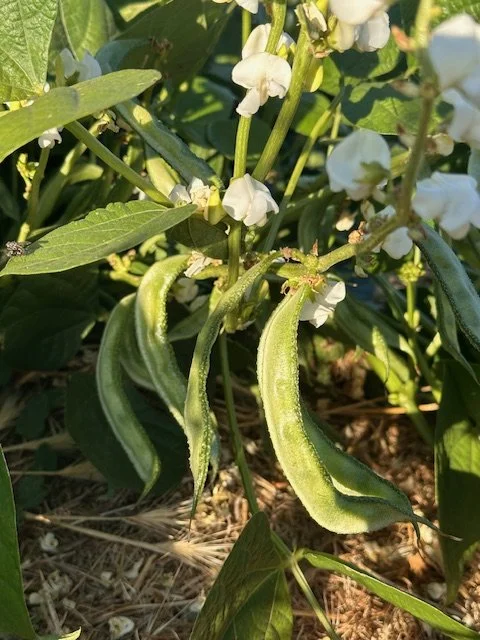
An easy to grow, bush variety of Val Papdi producing 4-5” long beans. The plants are 2-3 feet tall and produce towering shoots of bright white flowers followed by the beans. Harvest when the beans are still young and immature.
Seeds can be direct seeded or started indoors and trasplanted out once soil temperatures have warmed. We recommend planting at least 3 plants 12” apart from eachother to be able to harvest enough beans to cook with at a time. No trellising required!
Known as hyacinth beans in English.
Minimum 20 seeds per packet.