 Image 1 of 4
 Image 2 of 4
 Image 3 of 4
 Image 4 of 4
More Seeds

Tulsi Basil is one of the most culturally important herbs for medicinal and spiritual uses in South Asia. This red leaf variety ‘Krishna’ has high levels of rosmarinic acid and eugenol, which lends to its clove-like scent. Regular consumption of tulsi not only helps protect and detoxify the body's cells and organs, it can also help reduce toxic stress by relaxing and calming the mind and offering many other psychological benefits.
Plants grow to a height of 20” at maturity with small, reddish purple leaves. Leaves can be used fresh or dried for tea. This variety is the most medicinal and spiritual of any other variety.
Numerous studies also show that tulsi has anti-diabetic, anti-bacterial, anti-carcinogenic, anti-fertility, anti-ulcer and many other activities. The compounds present in this herb help the body and mind cope with a wide range of chemical, physical, infectious and emotional stresses and restore physiological and psychological function.
Seeds can be tricky to start since they are extremely tiny and require light to germinate. We use seed starting soil in a wide pot (or a takeout container with holes at the bottom), and sprinkle the seeds over the top. Lighly sprinkle a little seed starting soil over the seeds, taking care to not bury to seeds. Be careful while watering, as seeds can easily get buried from the force of the water. Cover the pot with saran wrap and place in a sunny window or greenhouse. Keep soil moist until first signs of germination. Once plants are 1/2” tall, you can seperate them into individual containers to continue growing.
At least 200 seeds per Packet.
Ocimum sanctum (sometimes referred to as Ocimum tenuiflorum)
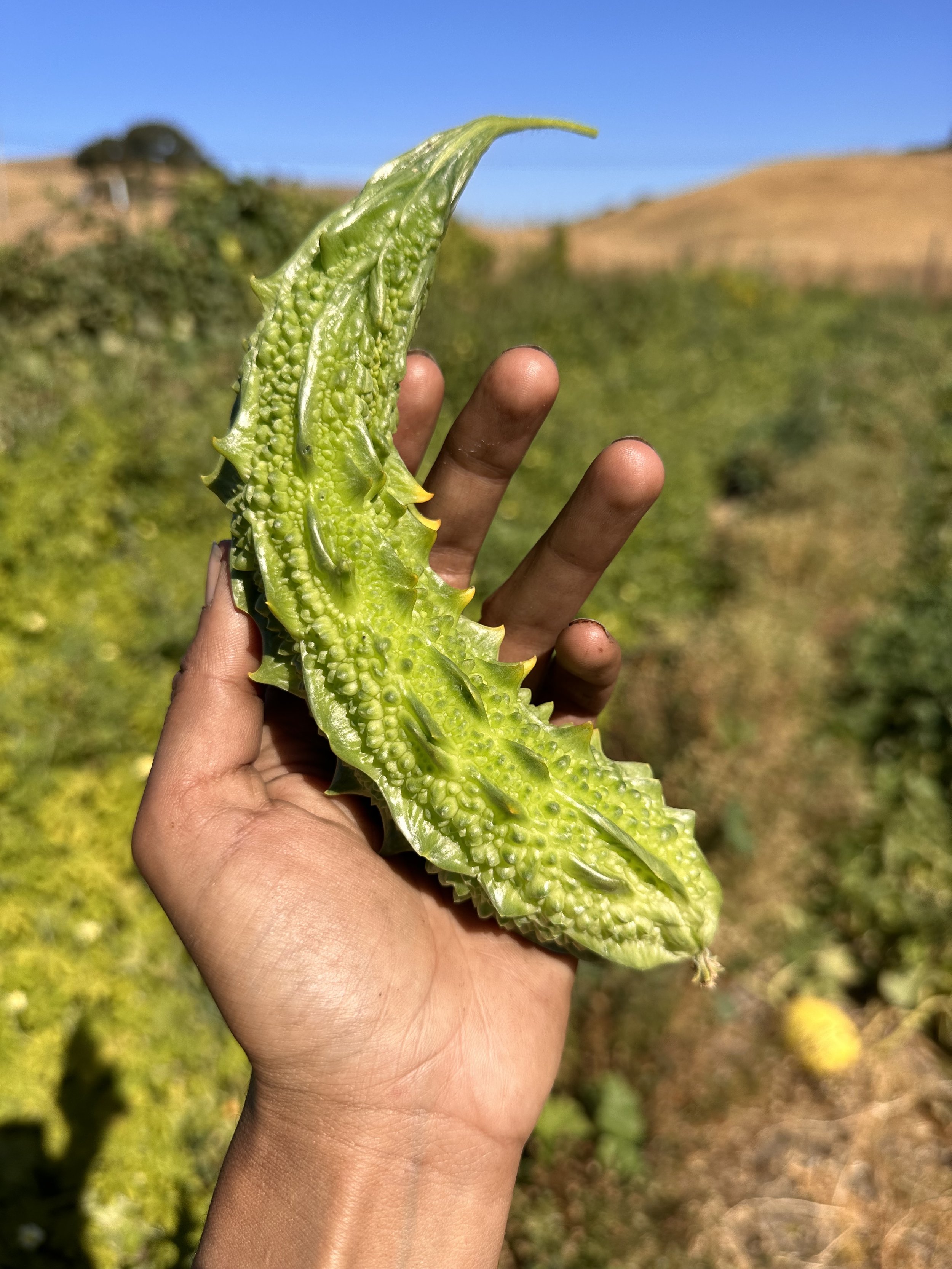
Classic Indian bittergourd variety. Fruits are 4-6” long, skin is deeply ridged and flavor is very bitter. Plants are vigorous and produce dozens and dozens of fruit through the growing season. Plant is vining and can grow up to 6-7 feet long with multiple off shoots. Vines can either be trellised or left to sprawl on the ground. Leaves, flowers and fruit are edible and highly medicinal. Flowers have a strong scent of Jasmine!
We like to cut up the fruit and soak them in salt water for an hour before cooking to reduce some of the bitterness. The fruits are considered a potent medicine in Ayurveda, believed to help lower blood sugar levels and treat liver diseases, to name a few.
Our seeds are directly from India and we have been stewarding them on our land for the last 2 years.
10 seeds per packet.
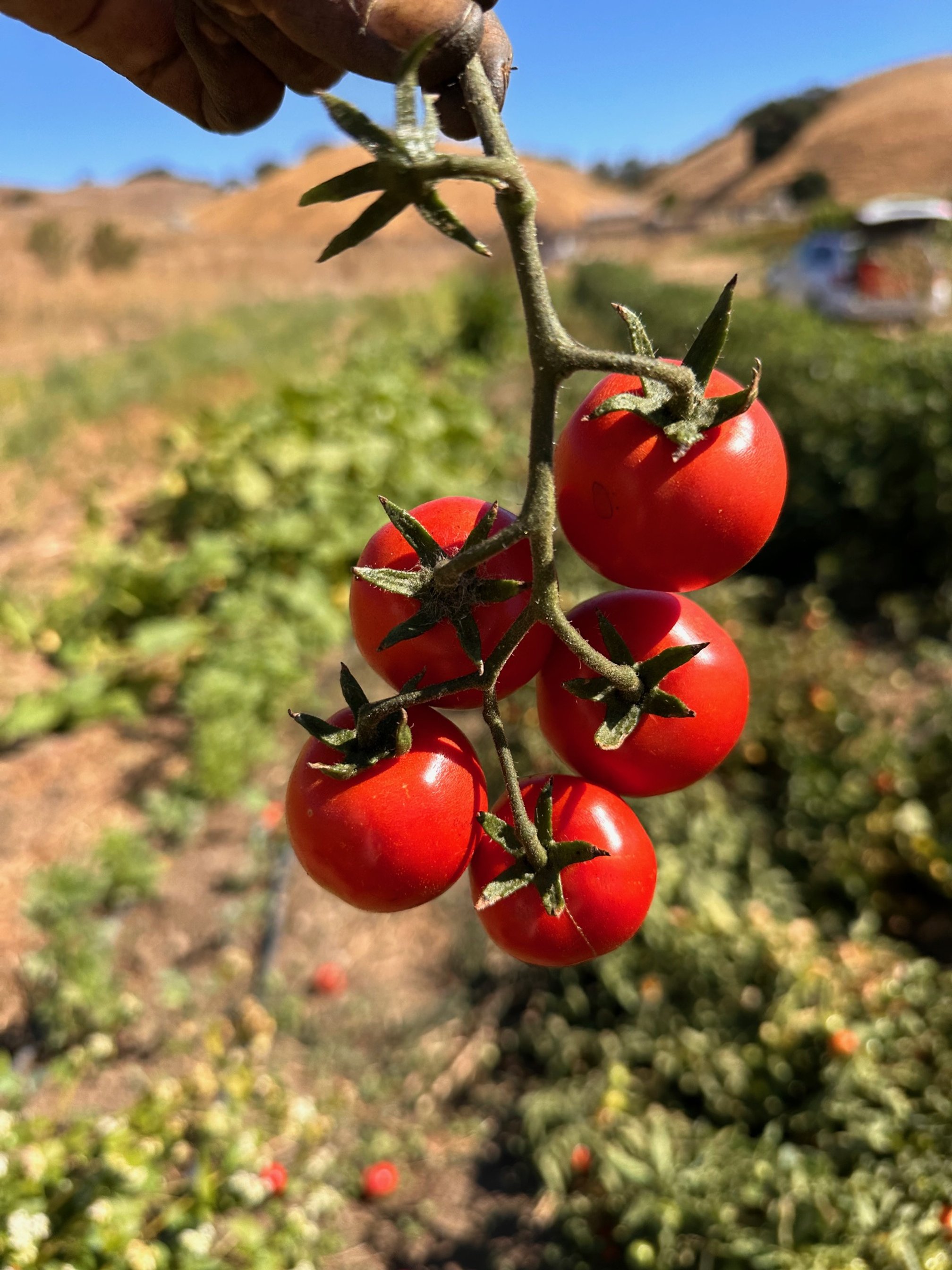
We named this tomato after the South Asian dish 'Kachumber' as an ode to the humble, yet ubiquitous side dish that we grew up eating. These tomatoes are firm, juicy, umami with the perfect ratio of sweet to tangy. They're a delicious fresh eating tomato and adding them to any tomato salad or side dish levels up the flavor profile exponentially. It's remarkable how delicious a simple dish can be when using heirloom vegetables that are not mass produced with GMO or hybrid seeds and pesticides.
This is a determinate tomato variety meaning it will set all its flowers within a 1 month period and the harvest period will soon follow. Each plant produces nearly 100 tomatoes that are each 2-3 inches in diameter. The plant grows in a bush habit so no staking is necessary although it can help with ease of harvest. We do not recommend pruning off the lower branches. These tomatoes are perfect for fresh eating but can also be used as a cooking or canning tomato.
Kachumber is just one of many 'tomato salads' that exists throughout the SSWANA region but also in the Mediteranean and Central America. In East Africa there is a nearly identical dish called Kachumbari; in Iran it’s known as Shirazi; in Iraq it's Summag. There are countless variations of this kind of salad and they always contain fresh tomatoes, cucumbers and a variation of other vegetables, herbs and citrus. Here in the US we are all probably familiar with the variation from Mexio known as Pico de Gallo.
Here is our family’s recipe for Kachumber:
Equal parts tomato, cucumber, onion all diced very finely, with a squeeze of lemon, some cilantro and salt. Other additions to this simple salad are optional (such as avocado or green mango) but using fresh, locally or home grown vegetables always makes this dish go from ordinary to extraordinary.
Our seeds are originally from India and this is our second year growing this variety for seed.
25 seeds per packet.
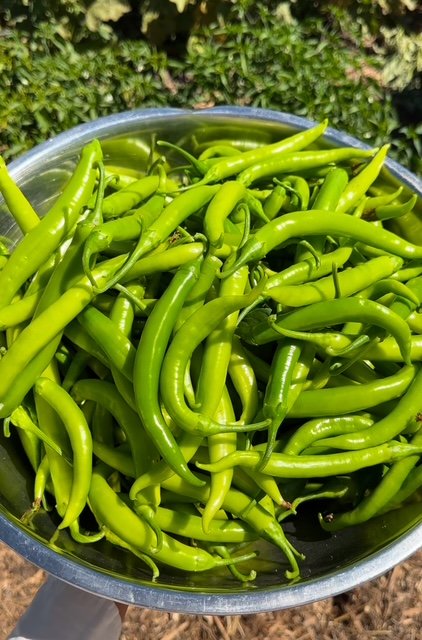
A light green, straight and smooth pepper with thick flesh. The medium pungency gives these peppers just the right kick for dipping in chickpea batter and making bhajia (pakoda). Plants are vigorous, producing 7-8 inch long peppers. Plants are early maturing and prolific producers.
We’re not joking when we say these plants produced so many peppers we’ve never seen anything like it. This variety starts producing earlier than all of our other pepper varieties and continues all the way until frost! Peppers are also great for making a quick achaar (indian pickle) or grilling!
Our seeds are originally from the Gujarat region of India.
25 seeds per packet.