 Image 1 of 3
 Image 2 of 3
 Image 3 of 3
More Seeds
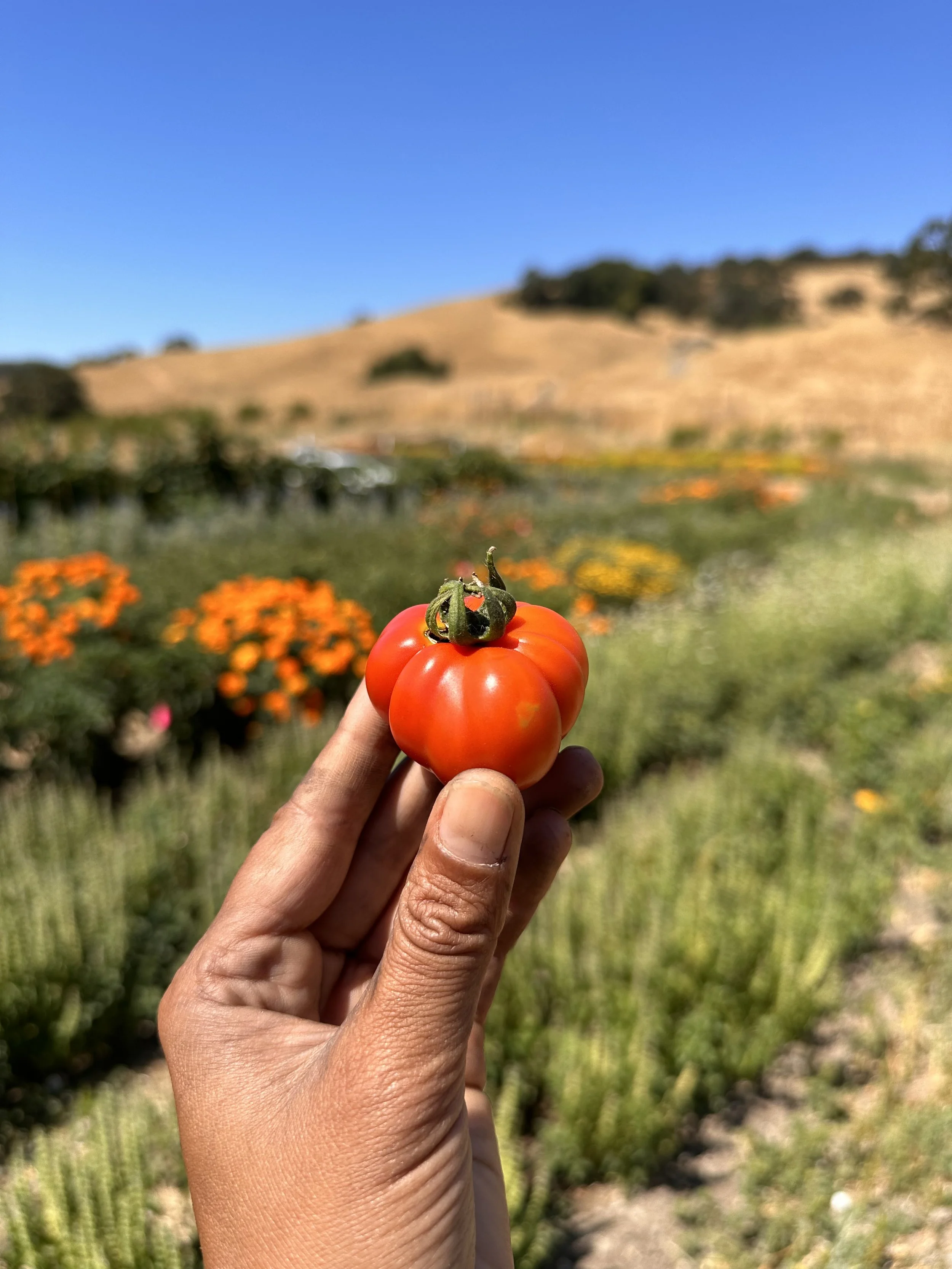
A delicious South Asian tomato variety. Seeds are originally from India and thought to have evolved over time to lend the classic, yet essential, sour component to South Asian dishes. From a community tomato tasting we held, the top tasting notes for these tomatoes were determined to be tangy, juicy, meaty and earthy. In general, they are more acidic than sweet and level up typical South Asian tomato based dishes such as rasam, tomato chutney, channa masala and tomato prawn curry…
Fruits are 2-3” in diameter and plants are extremely prolific. We named these tomatoes “Desi Girl” as they are similar in size to the Monsanto owned hybrid “Early Girl.” However, our seed is open pollinated and distinctly more tart than the early girl tomato.
Each Desi Girl tomato plant can produce up to 10 pounds of fruit through the season. As a determinate variety, it will set dozens of flowers at the same time and produce fruit within a 1 month window. Can benefit from a tomato cage although it is not necessary. Do not prune off the lower branches.
Because of how prolific these plants are, we always end up cooking down a bunch of the leftover tomatoes and freezing or canning them to use during the Winter!
These tomatoes were also featured front and center in SF Chronicles best dishes of 2023 thanks to Tacos Sincero and their Tomato Tostada (Ranked #2)
As an open pollinated variety, anyone can save seeds and regrow this same variety next year! Simply squeze the flesh of the ripe tomato into a small glass, add a bit of water and let ferment for a few days. Decant the seeds by adding more water and slowly pouring off the seeds and flesh that float to the top. Do this a few times until the water runs clear and the remaining seeds have settled to the bottom. Strain seeds, dry them on a plate of piece of wax paper and then store in a paper envelope or glass jar out of direct sunlight. Seeds stay viable for 5-7 years.
Minimum 25 seeds per packet.
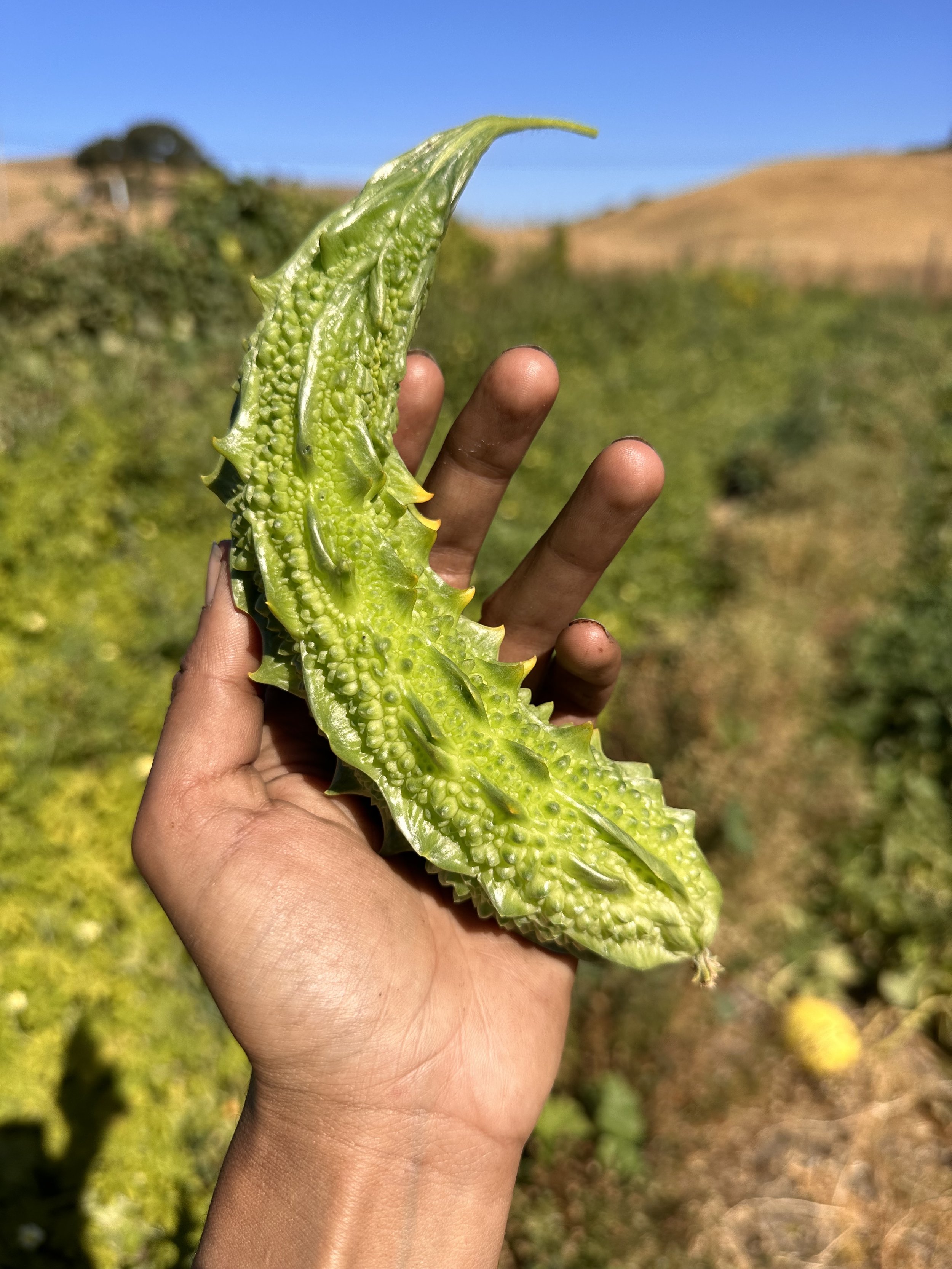
Classic Indian bittergourd variety. Fruits are 4-6” long, skin is deeply ridged and flavor is very bitter. Plants are vigorous and produce dozens and dozens of fruit through the growing season. Plant is vining and can grow up to 6-7 feet long with multiple off shoots. Vines can either be trellised or left to sprawl on the ground. Leaves, flowers and fruit are edible and highly medicinal. Flowers have a strong scent of Jasmine!
We like to cut up the fruit and soak them in salt water for an hour before cooking to reduce some of the bitterness. The fruits are considered a potent medicine in Ayurveda, believed to help lower blood sugar levels and treat liver diseases, to name a few.
Our seeds are directly from India and we have been stewarding them on our land for the last 2 years.
10 seeds per packet.
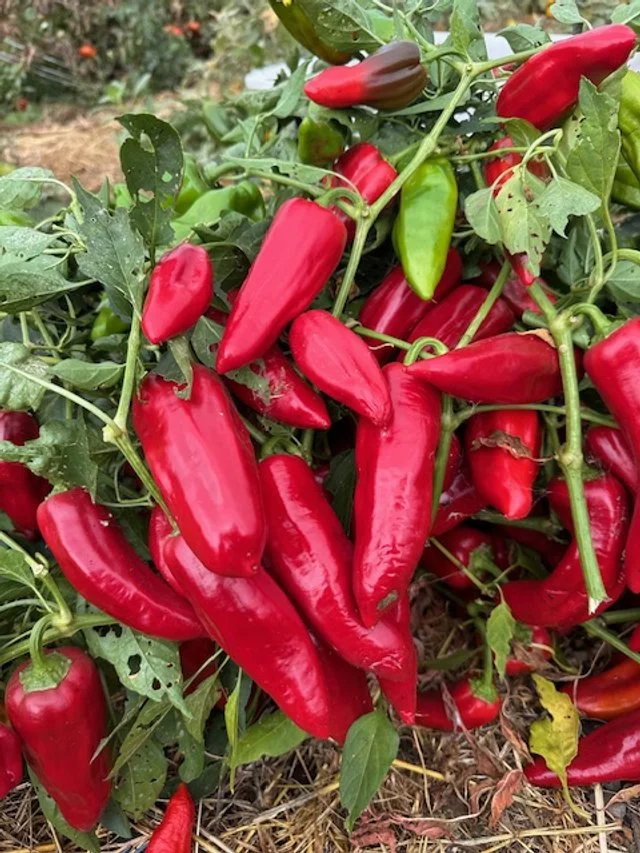
A super prolific pepper variety typically used in the powdered form to add color and heat to dishes. The fresh pepper has bright, citrusy notes and medium pungency. We love using the fresh pepper in cooked dishes. It adds the perfect amount of heat without being too overbearing. Just be careful if eating the peppers straight off the plant like we do… Some are much hotter than others!
This pepper variety was the first on our farm to turn red, despite our cooler climate. These plants tend to topple over because of how many peppers it produces at the same time so plan to stake or help support the plant. Can benefit from some shade if temperatures exceed 90 degrees.
Harvest peppers when red, place in oven on the lowest setting until peppers are totaly dry and blend into a powder or chili flake. We also really enjoyed cooking with the green pepper. It’s slight heat was a great addition to stir-frys and sautees!
25 seeds per packet.
Capsicum annuum

Malabar spinach, also known as Poi, is a tropical vine native to the Indian Subcontinent. Other names it goes by are Vietnamese Spinach, Ceylon spinach, Basella, Saan Choy (Chinese); Tsuru Murasa Kai (Japanese); Mong Toi (Vietnamese); Paag-Prung (Thai); Genjerot, Jingga, Gendola (Indonesian); alugbati (Filipino).
Malabar Spinach is a fast growing, heat tolerant vine that can grow over 30 feet in length. The leaves have a mucilaginous texture with a slight lemon and pepper flavor. When cooked, the mucilaginous texture disappears and the flavor resembles spinach, but doesn’t wilt, as is common with spinach. Try them in Pakoda (Bhajia)!
It does best in a location with some slight shade and will continue to sprawl over a trellis through the years (Zone 10 only). Can be grown in containers. Red Stemmed berries can be used for dye.
Start seeds indoors 4 weeks before planting outside or wait until nighttime temperatures are above 50 degrees to direct seed.
25 seeds per packet.