 Image 1 of 6
 Image 2 of 6
 Image 3 of 6
 Image 4 of 6
 Image 5 of 6
 Image 6 of 6
More Seeds
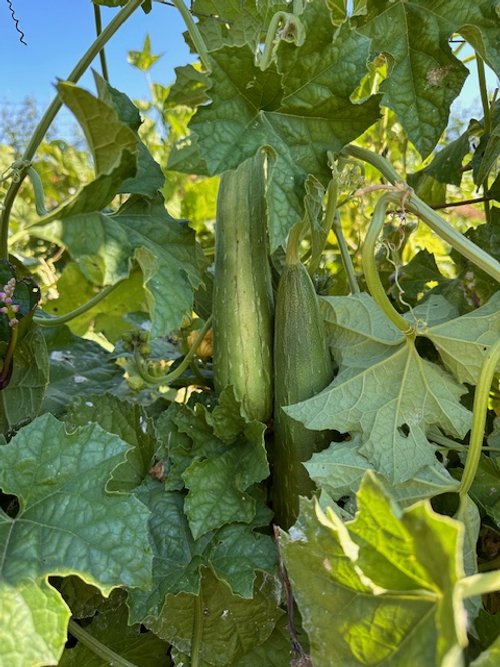
Our favorite plant to grow each year! This is a highly productive variety of the smooth luffa gourd, or Gilki. The fruits are edible when young, resembling a zucchini in flavor. The texture is light and airy, and absorbs spices and sauces well. However, we love to grow this plant for the dried sponges it produces if left on the vine to dry!
Plants can send out multiple shoots up to 10 feet long, so make sure to prodive a trellis, fence or space on the ground to grow. Plants like full sun and ample water. In warm regions, the luffahs will begin to dry on the vine 3 months after planting. In our region, we have warm days and cold nights, even in the Summer, so our luffahs were beginning to dry on the vine right as our frost hit (end of October). So we harvested all the luffas and stored them on a metal rack in our greenhouse and they dried up perfectly!
Our seeds are originally from the Samadhyala Village near Surat, India. They have been cultivated there for over 6 generations before being gifted to us to steward in Petaluma, CA.
Luffa aegyptiaca
10 seeds per packet.

Tulsi Basil is one of the most culturally important herbs for medicinal and spiritual uses in South Asia. This red leaf variety ‘Krishna’ has high levels of rosmarinic acid and eugenol, which lends to its clove-like scent. Regular consumption of tulsi not only helps protect and detoxify the body's cells and organs, it can also help reduce toxic stress by relaxing and calming the mind and offering many other psychological benefits.
Plants grow to a height of 20” at maturity with small, reddish purple leaves. Leaves can be used fresh or dried for tea. This variety is the most medicinal and spiritual of any other variety.
Numerous studies also show that tulsi has anti-diabetic, anti-bacterial, anti-carcinogenic, anti-fertility, anti-ulcer and many other activities. The compounds present in this herb help the body and mind cope with a wide range of chemical, physical, infectious and emotional stresses and restore physiological and psychological function.
Seeds can be tricky to start since they are extremely tiny and require light to germinate. We use seed starting soil in a wide pot (or a takeout container with holes at the bottom), and sprinkle the seeds over the top. Lighly sprinkle a little seed starting soil over the seeds, taking care to not bury to seeds. Be careful while watering, as seeds can easily get buried from the force of the water. Cover the pot with saran wrap and place in a sunny window or greenhouse. Keep soil moist until first signs of germination. Once plants are 1/2” tall, you can seperate them into individual containers to continue growing.
At least 200 seeds per Packet.
Ocimum sanctum (sometimes referred to as Ocimum tenuiflorum)
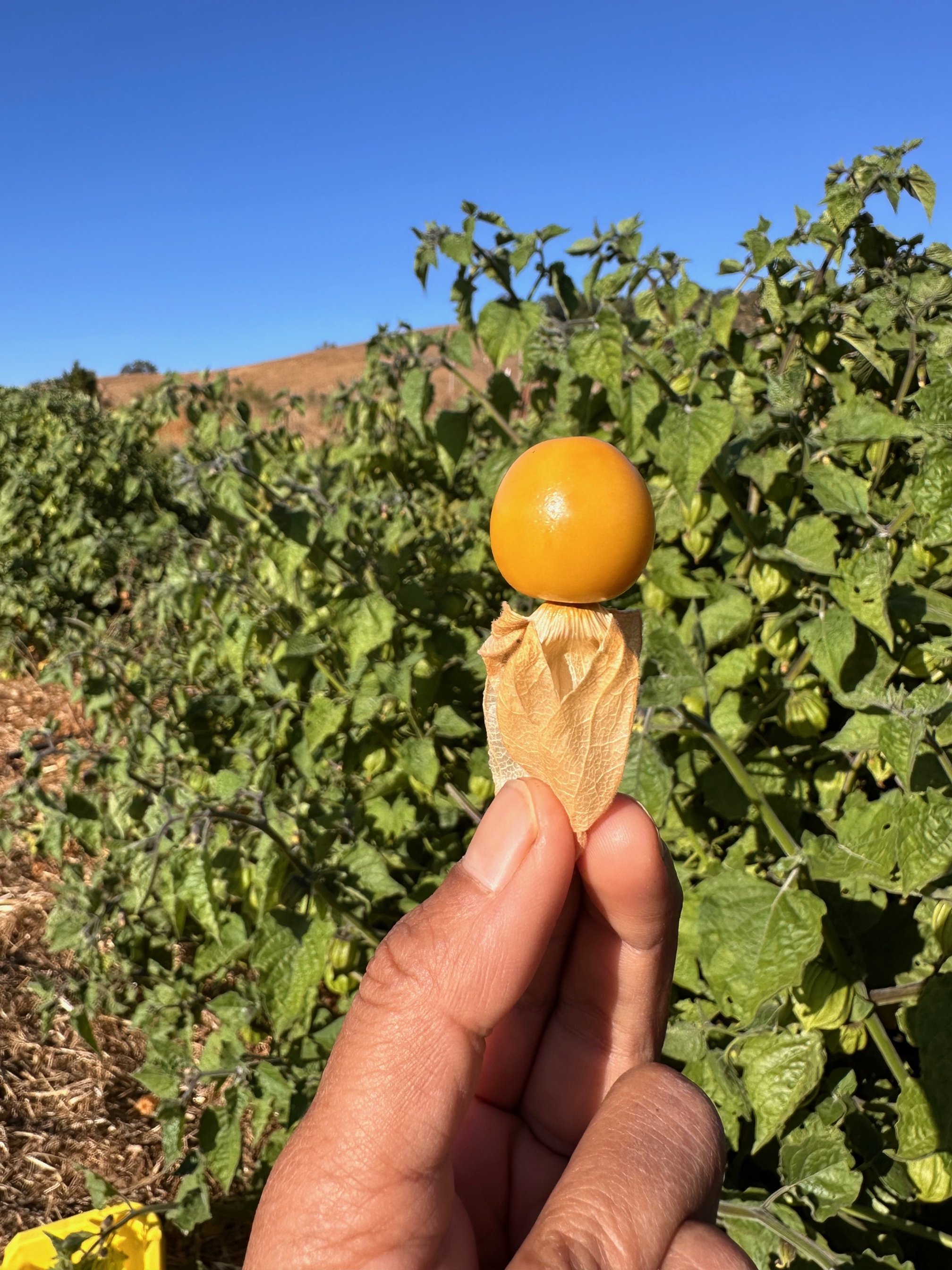
These seeds were gifted to us by one of our customers who brought them back from Karachi, Pakistan. The fruits have a hint of pinapple and vanilla, extremely delicious and not too sweet! We love snacking on them during our farm days.
This plant can grow to up to 5 feet wide and 3 feet tall. They are a perennial in regions without a frost and tend to die back and return the following Spring in regions with a frost.
In South Asia we make a chutney with the fruits, although each plant can produce hundreds of berries so there is always plenty leftover to snack on as well.
This fruit has cultural significance in regions all around the world. Just the sheer number of names these plants go by is a testament to this: Cape goodberry, Poha berry, Rasbhari, Ground Cherry, Uvilla, etc.
25 seeds per packet.

An heirloom pepper variety originally from Hubli, India. These peppers are long (5-6”), thick walled and spicy. They’re the classic Indian chillies, an essential for any and all South Asian cooking.
The plant itself is extremely prolific, sending out dozens of chillies that go from green to orange to red, affecting the spice level with it. The is our most favorite pepper variety on the farm. Perfect for those who like to have a few spicy green peppers to munch on with their meals. We have also made a delicious achaar (Indian pickle) using these green peppers and green mango. When the peppers turn red we like to put them in the oven on the lowest heat to quickly dry them down and either blend them into a chilli powder or into chilli flakes. Highly recommend using the chilli flakes for a chilli crisp! They have the perfect heat and smokiness.
These seeds were gifted to us by one of our customers at the Irvington Farmers Market in Fremont. He brought them back from his hometown of Hubli, in the Southern State of Karnataka, India. We have been stewarding this variety for the past four years.
25 seeds per packet.