Image 1 of 5
Image 2 of 5
Image 3 of 5
Image 4 of 5
Image 5 of 5
Kalonji Seeds
Kalonji, also known as Black Cumin, Black Seed, and Nigella is a highly medicinal spice used in South Asian and Middle Eastern cuisine. In the Tibb-e-Nabwi, the Muslim medicinal guide, 7 Nigella seeds a day is said to be the cure for all diseases except death. The seeds are also delicious when used on naan, curries, roasted vegetables or pickles.
The plant resembles the common garden flower, Love-in-a-mist, with delicate fennel like foliage and stands 10-12" tall. During peak bloom the plant sends out dozens of five or six petaled white flowers that are highly attractive to bees. Over the course of a week, the seed pod slowly begins to balloon up and develop as it is pollinated. It is a lovely sight and a wonderful activity to sit in the garden and watch as the bees are hard at work!
We have found that these seeds do not transplant well. To plant, simply sprinkle seeds on top of soil surface and scratch seeds in or gently use a rake to bury seeds slightly. Plants do not need to be accurately spaced but aim for 2-4" between plants. No thinning is required. For best results, it's best to wait until the weather has warmed and the last chance of frost is long gone. Keep soil moist until first signs of germination. If hand watering, be careful not to drown seeds while watering. It can be helpful to cover seeds with floating row cover or cardboard for the first week to help keep the soil surface moist. Seeds should germinate in 7-10 days. Can be grown in pots too.
Flowers can be harvested for fresh flower bouquets. At full maturity, the seeds pods will turn brown and become papery. To save seeds for culinary or planting purposes, allow pods to fully dry on plant and gently open over a bowl or bag.
We were astonished at how potent the smell of freshly harvested seeds were! Growing up only having smelled the bagged seeds from Indian stores, there is a stark difference between the two. Our seeds are originally from the Jhalawar district in Rajasthan, India and we have been stewarding them here on our land for the last 2 years.
Each packet includes minimum 1/2 oz of seeds. Enough for cooking and planting purposes.
Kalonji, also known as Black Cumin, Black Seed, and Nigella is a highly medicinal spice used in South Asian and Middle Eastern cuisine. In the Tibb-e-Nabwi, the Muslim medicinal guide, 7 Nigella seeds a day is said to be the cure for all diseases except death. The seeds are also delicious when used on naan, curries, roasted vegetables or pickles.
The plant resembles the common garden flower, Love-in-a-mist, with delicate fennel like foliage and stands 10-12" tall. During peak bloom the plant sends out dozens of five or six petaled white flowers that are highly attractive to bees. Over the course of a week, the seed pod slowly begins to balloon up and develop as it is pollinated. It is a lovely sight and a wonderful activity to sit in the garden and watch as the bees are hard at work!
We have found that these seeds do not transplant well. To plant, simply sprinkle seeds on top of soil surface and scratch seeds in or gently use a rake to bury seeds slightly. Plants do not need to be accurately spaced but aim for 2-4" between plants. No thinning is required. For best results, it's best to wait until the weather has warmed and the last chance of frost is long gone. Keep soil moist until first signs of germination. If hand watering, be careful not to drown seeds while watering. It can be helpful to cover seeds with floating row cover or cardboard for the first week to help keep the soil surface moist. Seeds should germinate in 7-10 days. Can be grown in pots too.
Flowers can be harvested for fresh flower bouquets. At full maturity, the seeds pods will turn brown and become papery. To save seeds for culinary or planting purposes, allow pods to fully dry on plant and gently open over a bowl or bag.
We were astonished at how potent the smell of freshly harvested seeds were! Growing up only having smelled the bagged seeds from Indian stores, there is a stark difference between the two. Our seeds are originally from the Jhalawar district in Rajasthan, India and we have been stewarding them here on our land for the last 2 years.
Each packet includes minimum 1/2 oz of seeds. Enough for cooking and planting purposes.
More Seeds
Drought tolerant, annual plant producing the white sesame seed used in South Asian and many other Asian cusines. Plant can grow up to 6 feet - here in Petaluma it grew 4 feet tall and was producing stunning pale pink flowers up until the first frost.
To harvest the seeds, wait for the seed pods to turn brown and dry up on the stalk. Put them into a brown paper bag or fabric bag to collect all the seeds. In Petaluma, the pods were just beginning to turn brown at the end of the season so we put them in a big lawn bag and stored them in a warm, dry place until the plant fully matured and the seed pods ruptured open to release the seeds.
Plant thrives in warm, dry locations. Once plant is established, waterings can be reduced.
200 seeds per packet
Sesamum indicum
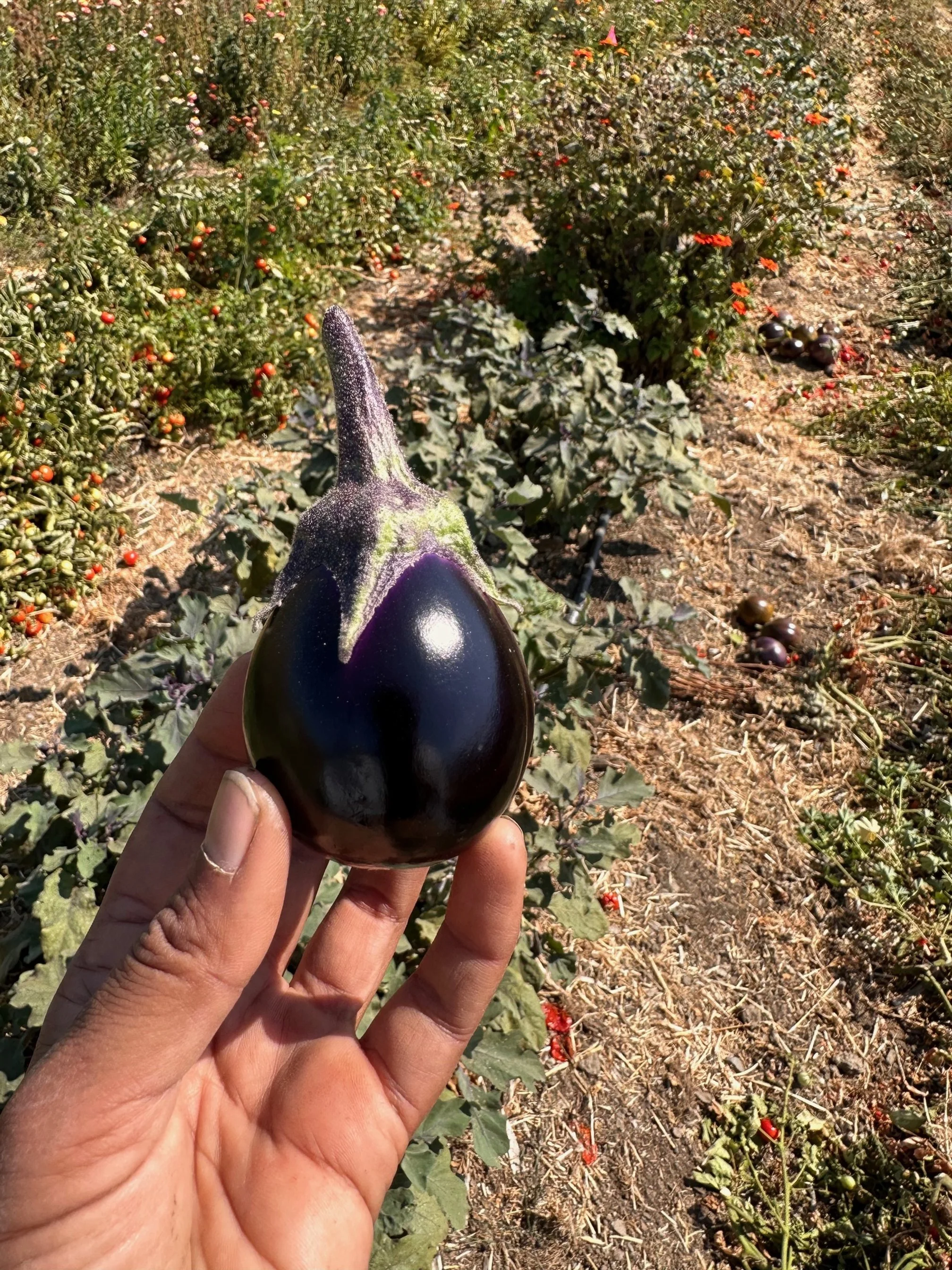
A popular variety of eggplant in South and Southeast Asia. Small oval eggplant with glossy reddish-purple skin. This variety grows to 2-3” and is a bit easier to grow than other eggplants. Perfect for making masala stuffed eggplant. I was shocking just how many eggplants we were able to harvest off of each plant. If you are consistently harvesting them when they are still small, the plant will continue to put energy back into flower/fruit production. You can also let the eggplants grow a bit bigger and they are still delicious. We made a lot of batches of baba ganoush with the eggplants that got a little too big.
This variety is one of the first crops on our farm to start producing fruits and produces all the way until frost. Grows as a small bush and does not require staking or trellising. Can tolerate colder climates.
25 seeds per packet.
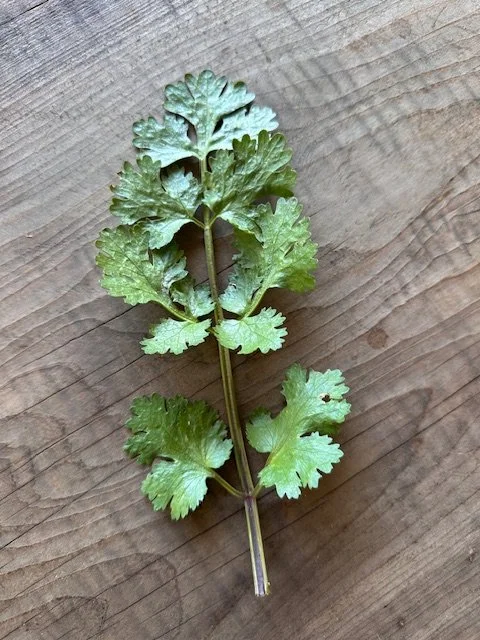
Dark green, deeply serrated and very aromatic variety of Cilantro. Our seeds are originally from Karachi, Pakistan. Compared to store bought cilantro, this variety is much more pungent and lends well to South Asian dishes.
Cilantro grows best in cooler weather. We plant our cilantro in early Spring or late Summer. If you wish to grow Cilantro in the Summer, it’s best to plant it in a location where it can receive some shade in the afternoon.
Minimum 150 seeds per packet.
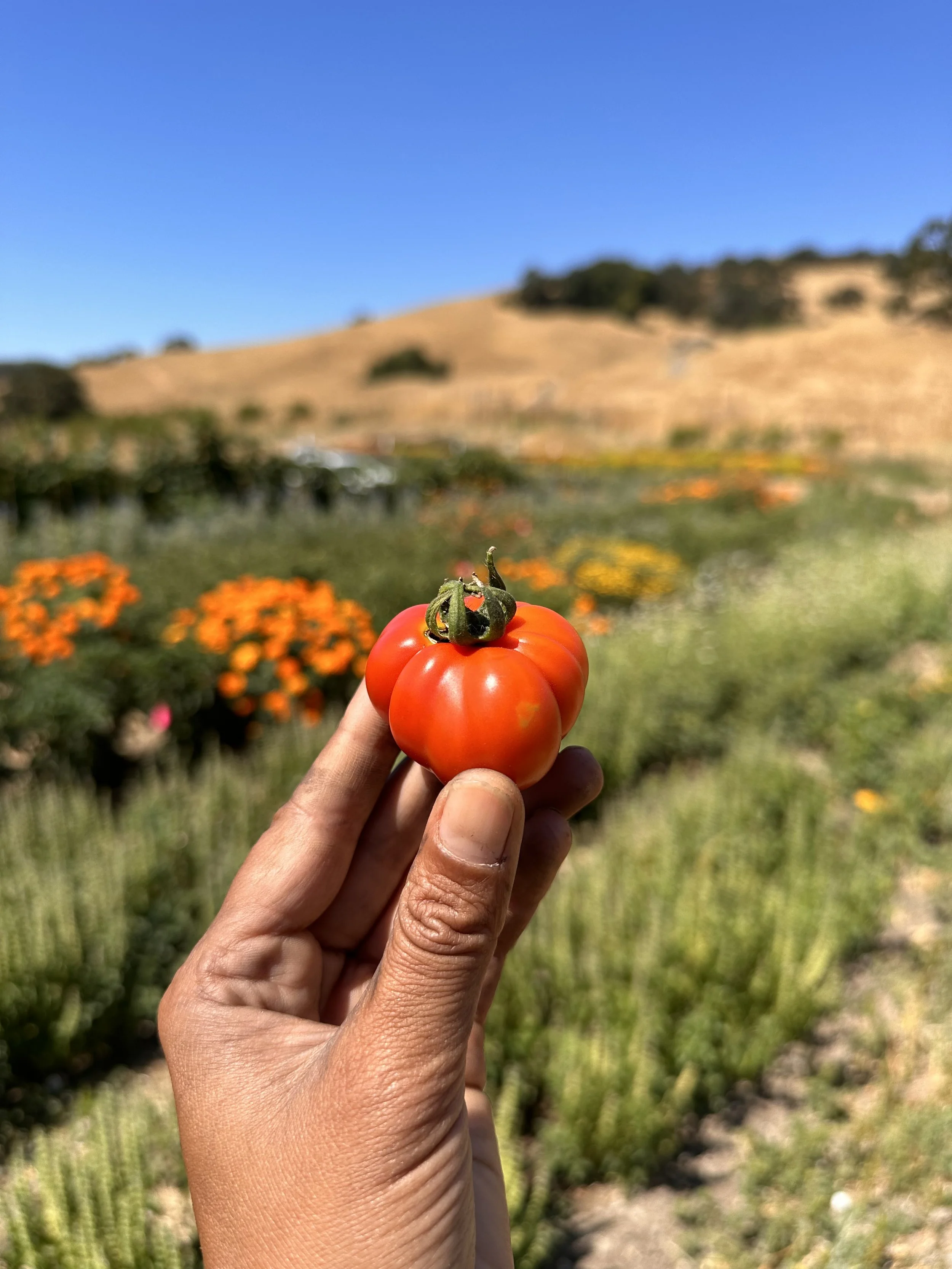
A delicious South Asian tomato variety. Seeds are originally from India and thought to have evolved over time to lend the classic, yet essential, sour component to South Asian dishes. From a community tomato tasting we held, the top tasting notes for these tomatoes were determined to be tangy, juicy, meaty and earthy. In general, they are more acidic than sweet and level up typical South Asian tomato based dishes such as rasam, tomato chutney, channa masala and tomato prawn curry…
Fruits are 2-3” in diameter and plants are extremely prolific. We named these tomatoes “Desi Girl” as they are similar in size to the Monsanto owned hybrid “Early Girl.” However, our seed is open pollinated and distinctly more tart than the early girl tomato.
Each Desi Girl tomato plant can produce up to 10 pounds of fruit through the season. As a determinate variety, it will set dozens of flowers at the same time and produce fruit within a 1 month window. Can benefit from a tomato cage although it is not necessary. Do not prune off the lower branches.
Because of how prolific these plants are, we always end up cooking down a bunch of the leftover tomatoes and freezing or canning them to use during the Winter!
These tomatoes were also featured front and center in SF Chronicles best dishes of 2023 thanks to Tacos Sincero and their Tomato Tostada (Ranked #2)
As an open pollinated variety, anyone can save seeds and regrow this same variety next year! Simply squeze the flesh of the ripe tomato into a small glass, add a bit of water and let ferment for a few days. Decant the seeds by adding more water and slowly pouring off the seeds and flesh that float to the top. Do this a few times until the water runs clear and the remaining seeds have settled to the bottom. Strain seeds, dry them on a plate of piece of wax paper and then store in a paper envelope or glass jar out of direct sunlight. Seeds stay viable for 5-7 years.
Minimum 25 seeds per packet.