 Image 1 of 5
 Image 2 of 5
 Image 3 of 5
 Image 4 of 5
 Image 5 of 5
More Seeds

Kalonji, also known as Black Cumin, Black Seed, and Nigella is a highly medicinal spice used in South Asian and Middle Eastern cuisine. In the Tibb-e-Nabwi, the Muslim medicinal guide, 7 Nigella seeds a day is said to be the cure for all diseases except death. The seeds are also delicious when used on naan, curries, roasted vegetables or pickles.
The plant resembles the common garden flower, Love-in-a-mist, with delicate fennel like foliage and stands 10-12" tall. During peak bloom the plant sends out dozens of five or six petaled white flowers that are highly attractive to bees. Over the course of a week, the seed pod slowly begins to balloon up and develop as it is pollinated. It is a lovely sight and a wonderful activity to sit in the garden and watch as the bees are hard at work!
We have found that these seeds do not transplant well. To plant, simply sprinkle seeds on top of soil surface and scratch seeds in or gently use a rake to bury seeds slightly. Plants do not need to be accurately spaced but aim for 2-4" between plants. No thinning is required. For best results, it's best to wait until the weather has warmed and the last chance of frost is long gone. Keep soil moist until first signs of germination. If hand watering, be careful not to drown seeds while watering. It can be helpful to cover seeds with floating row cover or cardboard for the first week to help keep the soil surface moist. Seeds should germinate in 7-10 days. Can be grown in pots too.
Flowers can be harvested for fresh flower bouquets. At full maturity, the seeds pods will turn brown and become papery. To save seeds for culinary or planting purposes, allow pods to fully dry on plant and gently open over a bowl or bag.
We were astonished at how potent the smell of freshly harvested seeds were! Growing up only having smelled the bagged seeds from Indian stores, there is a stark difference between the two. Our seeds are originally from the Jhalawar district in Rajasthan, India and we have been stewarding them here on our land for the last 2 years.
Each packet includes minimum 1/2 oz of seeds. Enough for cooking and planting purposes.

Drought tolerant, annual plant producing the white sesame seed used in South Asian and many other Asian cusines. Plant can grow up to 6 feet - here in Petaluma it grew 4 feet tall and was producing stunning pale pink flowers up until the first frost.
To harvest the seeds, wait for the seed pods to turn brown and dry up on the stalk. Put them into a brown paper bag or fabric bag to collect all the seeds. In Petaluma, the pods were just beginning to turn brown at the end of the season so we put them in a big lawn bag and stored them in a warm, dry place until the plant fully matured and the seed pods ruptured open to release the seeds.
Plant thrives in warm, dry locations. Once plant is established, waterings can be reduced.
200 seeds per packet
Sesamum indicum
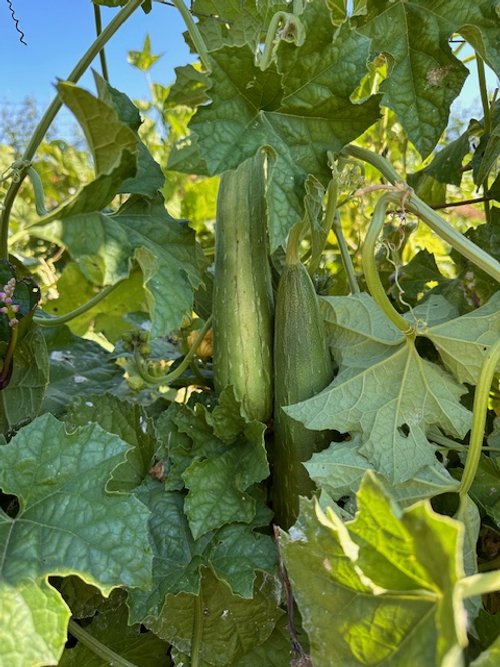
Our favorite plant to grow each year! This is a highly productive variety of the smooth luffa gourd, or Gilki. The fruits are edible when young, resembling a zucchini in flavor. The texture is light and airy, and absorbs spices and sauces well. However, we love to grow this plant for the dried sponges it produces if left on the vine to dry!
Plants can send out multiple shoots up to 10 feet long, so make sure to prodive a trellis, fence or space on the ground to grow. Plants like full sun and ample water. In warm regions, the luffahs will begin to dry on the vine 3 months after planting. In our region, we have warm days and cold nights, even in the Summer, so our luffahs were beginning to dry on the vine right as our frost hit (end of October). So we harvested all the luffas and stored them on a metal rack in our greenhouse and they dried up perfectly!
Our seeds are originally from the Samadhyala Village near Surat, India. They have been cultivated there for over 6 generations before being gifted to us to steward in Petaluma, CA.
Luffa aegyptiaca
10 seeds per packet.

Also, known as gongura, ambada bhaji, roselle and sour leaf, this leafy green is sour and adds a great tangy touch to meat or vegetable dishes. The leaves are also used in pickles or fresh in salads. A typical way to prepare the sour leaves, or Gongura, in Southern India is to make a chutney.
Produces stunning red flowers that can be harvsted and dried for tea or drinks such as jamaica. If harvesting for tea, harvest when flowers have fallen off and the red cone-like calyxes remains. Calyxes can also be used for dye.
Plants can grow up to 5 feet tall, although in our climate they only reach around 3 feet. Produces plenty of flowers by late-summer. Flowers are edible.
This is our second year growing and saving seeds for this variety. The seeds are originally from India but we’ve found that they have already adapted well to our more temperate (and much colder) climate.
20 seeds per packet.
Hibiscus sabdariffa