 Image 1 of 2
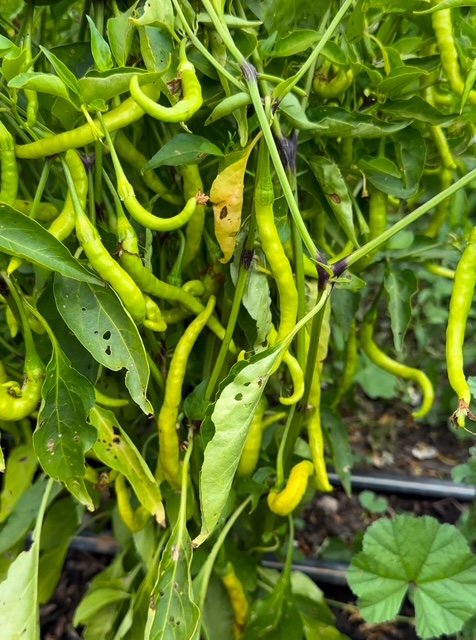 Image 2 of 2
More Seeds
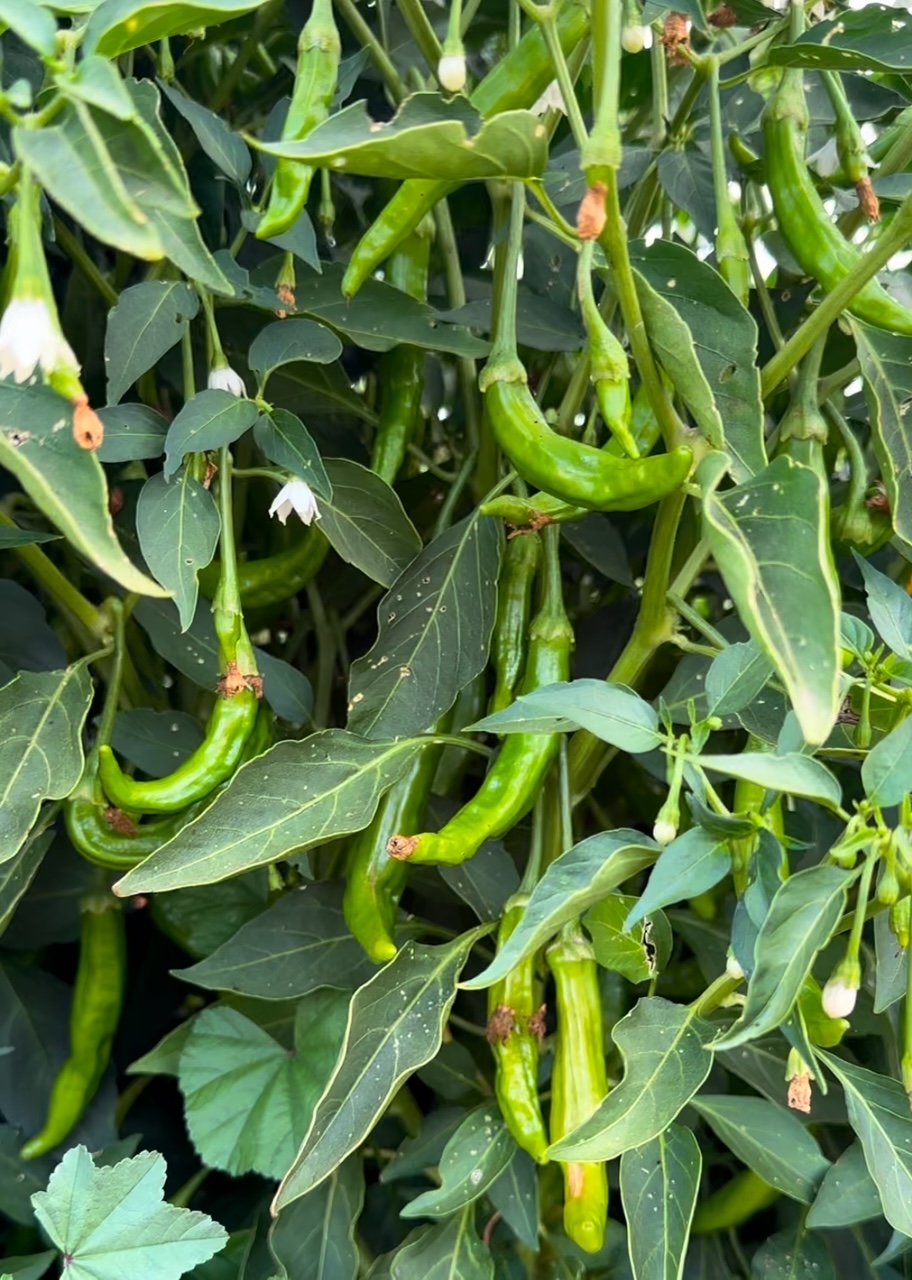
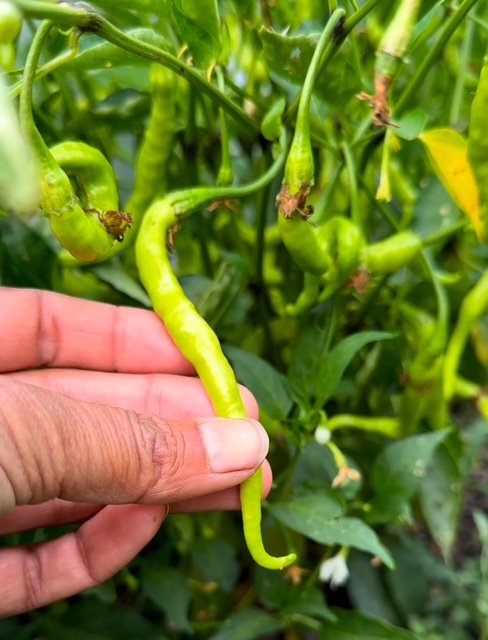
VERY prolific producer of medium spice level chillies perfect for cooking with! This variety hails from the Guntur District of Andhra Pradesh, India, the largest chilli growing region of South Asia. We loved the versatilitiy of these chillies. Great for cooking with while still green or in a chilli pickle (achaar), and once they turned red we dried them on the lowest setting in the oven and ground them down into a chilli powder!
Each plant produces dozens (seriously, prodably over 100 peppers each) so you’ll have plenty of peppers to cook with!
25 seeds per packet.
Capsicum annuum

Malabar spinach, also known as Poi, is a tropical vine native to the Indian Subcontinent. Other names it goes by are Vietnamese Spinach, Ceylon spinach, Basella, Saan Choy (Chinese); Tsuru Murasa Kai (Japanese); Mong Toi (Vietnamese); Paag-Prung (Thai); Genjerot, Jingga, Gendola (Indonesian); alugbati (Filipino).
Malabar Spinach is a fast growing, heat tolerant vine that can grow over 30 feet in length. The leaves have a mucilaginous texture with a slight lemon and pepper flavor. When cooked, the mucilaginous texture disappears and the flavor resembles spinach, but doesn’t wilt, as is common with spinach. Try them in Pakoda (Bhajia)!
It does best in a location with some slight shade and will continue to sprawl over a trellis through the years (Zone 10 only). Can be grown in containers. Red Stemmed berries can be used for dye.
Start seeds indoors 4 weeks before planting outside or wait until nighttime temperatures are above 50 degrees to direct seed.
25 seeds per packet.
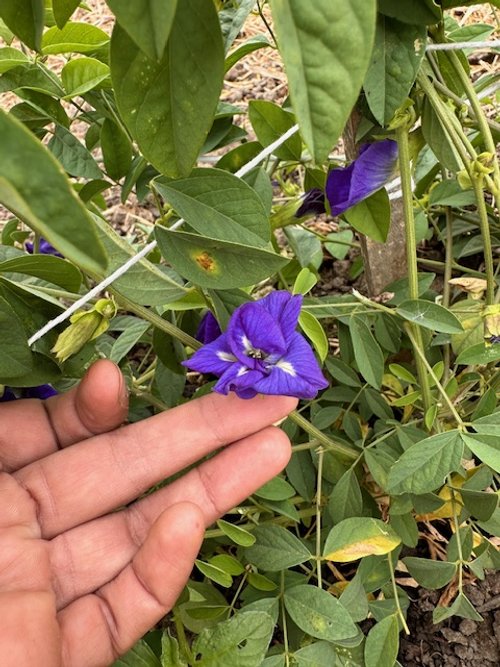
A vining perennial in Zones 10+, this legume grows throughout Asia and has various uses. The flowers are known as "Aparajita" (अपरजिता) in Hindi.
The plant produces deep blue flowers that are typically used as dye. The flowers can also be added to tea, rice or other foods to impart a deep blue color. It has been used for centuries in Ayurveda as a memory enhancer, nootropic, antistress, anxiolytic, antidepressant, anticonvulsant, tranquilizing and sedative agent. The flowers are also used in pujas.
The vine sends out multiple branches that could either be trellised or left to sprawl on the ground. The vine can grow to 4-5 feet tall if trellised. The leaves and flowers both resemble those of other pea plants but the pea pod is only edible when very young and tender. As a legume, the plant fixes nitrogen back into the soil. Prefers full sun.
To make tea:
Use one-quarter of a cup of dried butterfly pea flowers per one to two cups of water. Bring the water to a boil, then remove from heat and add your flowers. Allow them to steep until the water has turned a deep purple or indigo, up to eight minutes. It can be served hot or over ice. Then, add lemon juice and sweetener to taste. As you add the lemon juice, watch the color change from purple to violet!
10 seeds per packet.
Clitoria ternatea
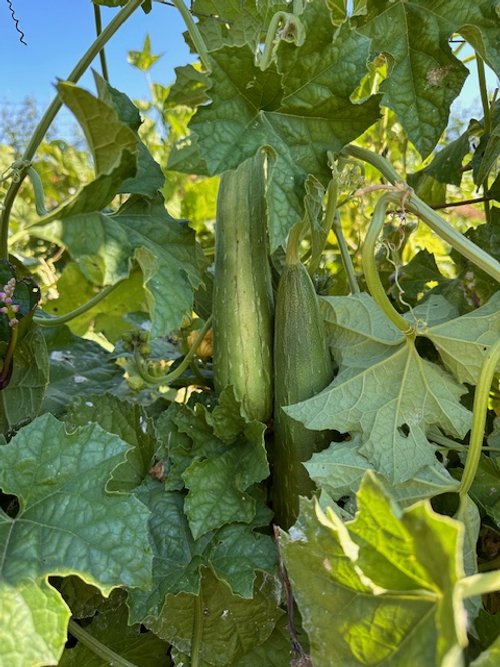
Our favorite plant to grow each year! This is a highly productive variety of the smooth luffa gourd, or Gilki. The fruits are edible when young, resembling a zucchini in flavor. The texture is light and airy, and absorbs spices and sauces well. However, we love to grow this plant for the dried sponges it produces if left on the vine to dry!
Plants can send out multiple shoots up to 10 feet long, so make sure to prodive a trellis, fence or space on the ground to grow. Plants like full sun and ample water. In warm regions, the luffahs will begin to dry on the vine 3 months after planting. In our region, we have warm days and cold nights, even in the Summer, so our luffahs were beginning to dry on the vine right as our frost hit (end of October). So we harvested all the luffas and stored them on a metal rack in our greenhouse and they dried up perfectly!
Our seeds are originally from the Samadhyala Village near Surat, India. They have been cultivated there for over 6 generations before being gifted to us to steward in Petaluma, CA.
Luffa aegyptiaca
10 seeds per packet.